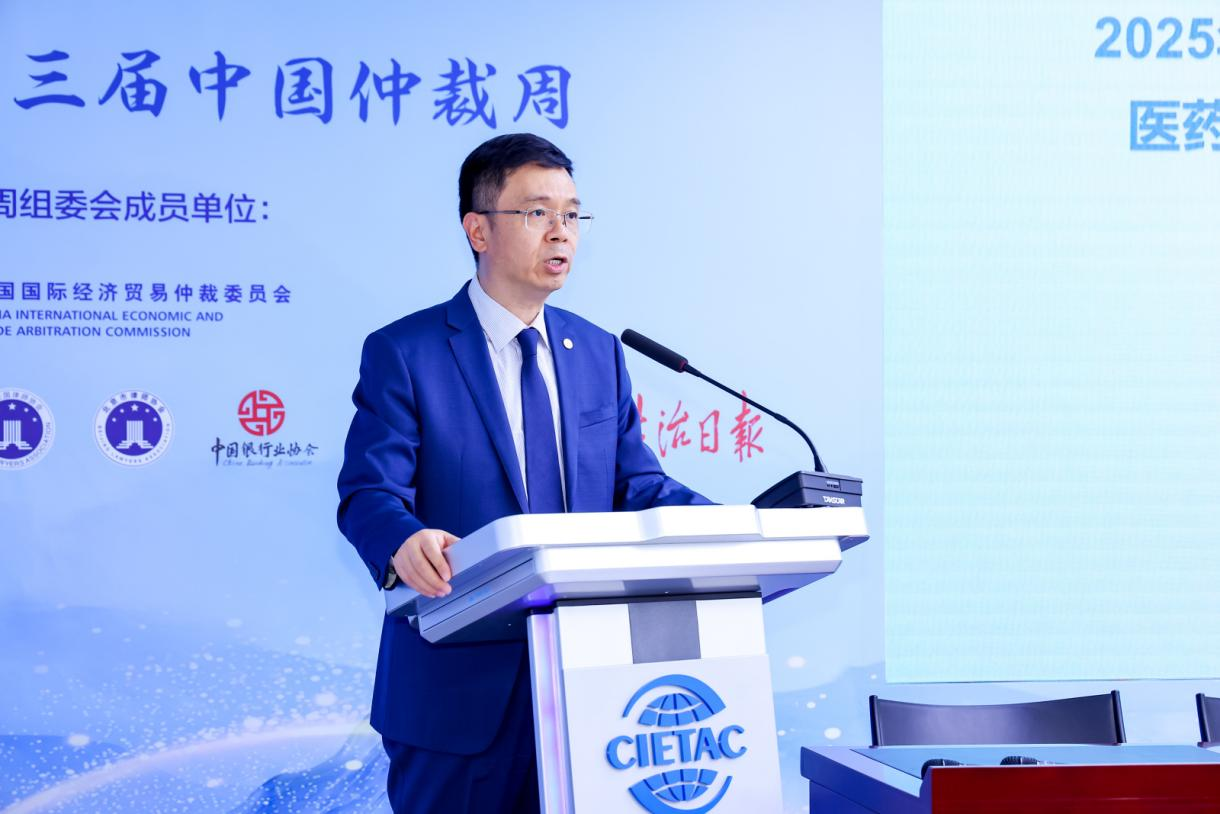
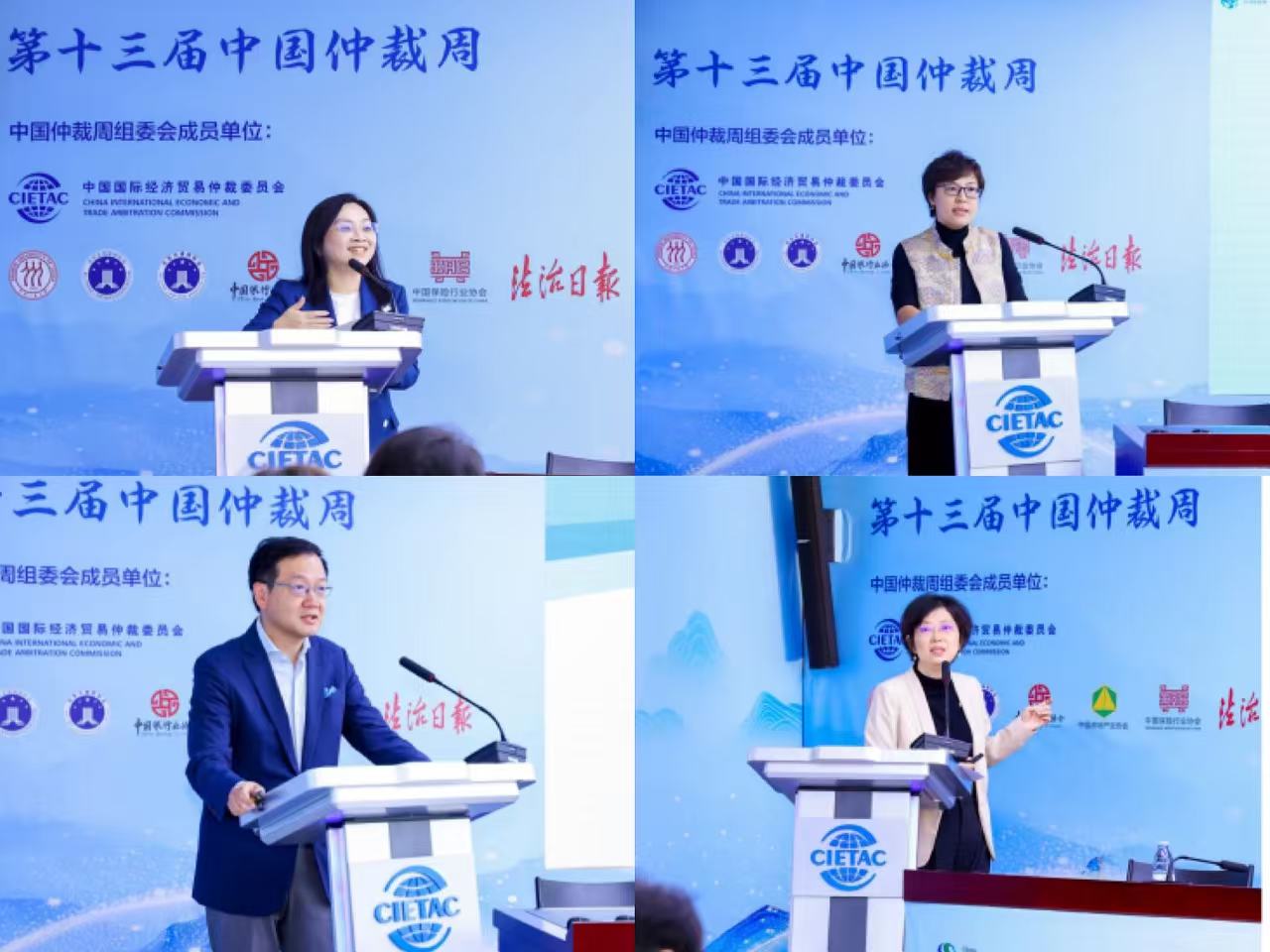
On September 22, 2025, the 13th China Arbitration Week— Seminar on Arbitration for Healthcare Disputes was successfully held in Beijing. The event was hosted by the Beijing Lawyers Association  and organized by its Special Committee on Medical and Health Law, with the China International Economic and Trade Arbitration Commission (CIETAC) serving as the guiding organization, and the Medical and Health Work Committee of the Beijing Committee of the Chinese Peasants and Workers Democratic Party  as supporting organization. The Seminar brought together approximately 70 participants, including general counsel of pharmaceutical enterprises, experts from medical institutions, senior arbitrators, legal scholars, and representatives from the pharmaceutical industry to focus on pain points in dispute resolution within the healthcare sector and explored new pathways for the professional development of arbitration. Wan Xin, Vice President of the Beijing Lawyers Association, presided over the opening session.


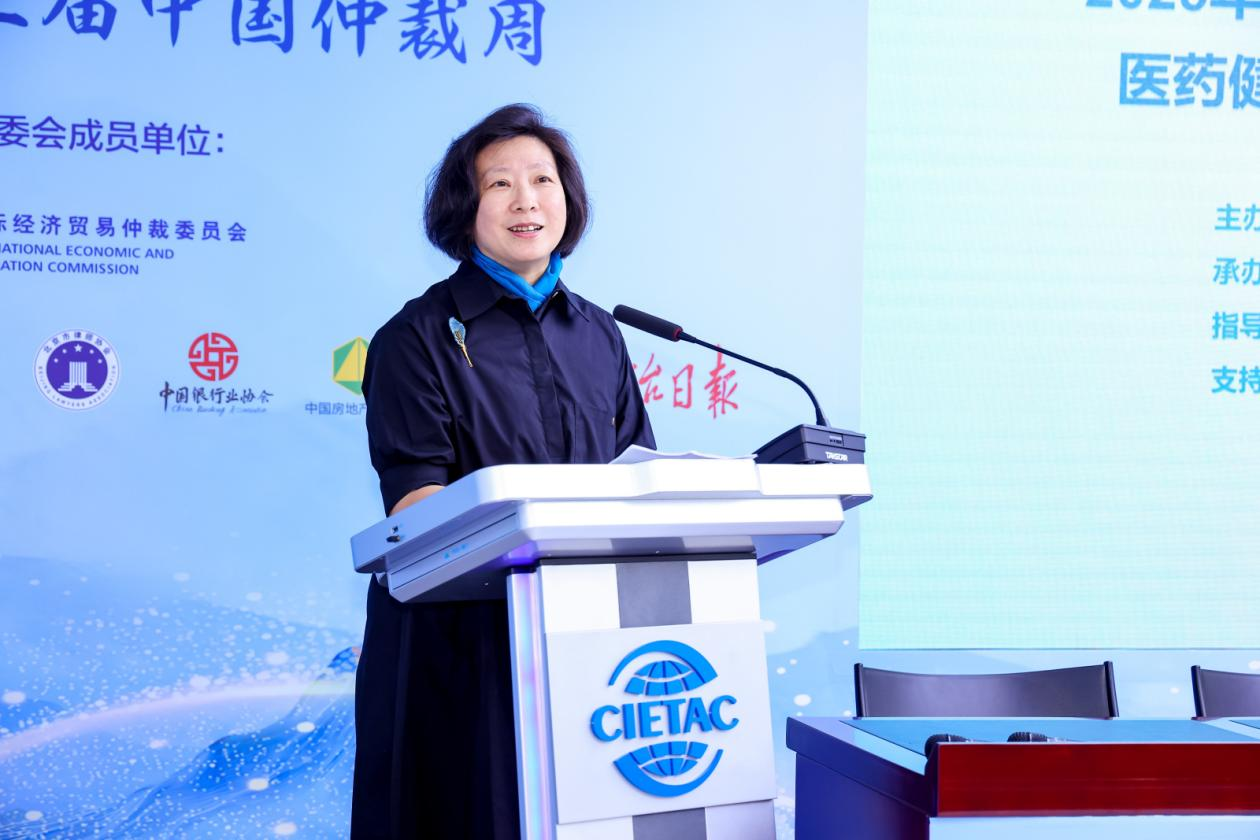
(Xie Changqing, Vice President of the Arbitration Court of CIETAC, delivering the opening remarks.)


Xie Changqing, Vice President of the Arbitration Court of CIETAC, stated in her remarks that as China’s healthcare industry accelerates innovation and going global, disputes involving cutting-edge technologies and investment cooperation have been increasing. Arbitration, with its unique advantages, plays an important role in resolving disputes in the healthcare sector and safeguarding industrial development. CIETAC has accumulated rich experience in handling disputes in the healthcare sector. Through continuous innovation and improvement of arbitration rules and practices, highly qualified, specialized, and international panel of arbitrators, and the dual advantages of arbitration–mediation integration mechanisms, CIETAC precisely responds to industry needs and ensures the high-quality resolution of healthcare-related disputes. Looking ahead, CIETAC will further strengthen interactions with the healthcare industry, listen closely to the demands, explore more effective pathways for resolving healthcare disputes, and provide robust legal safeguards for the sound development of the industry.


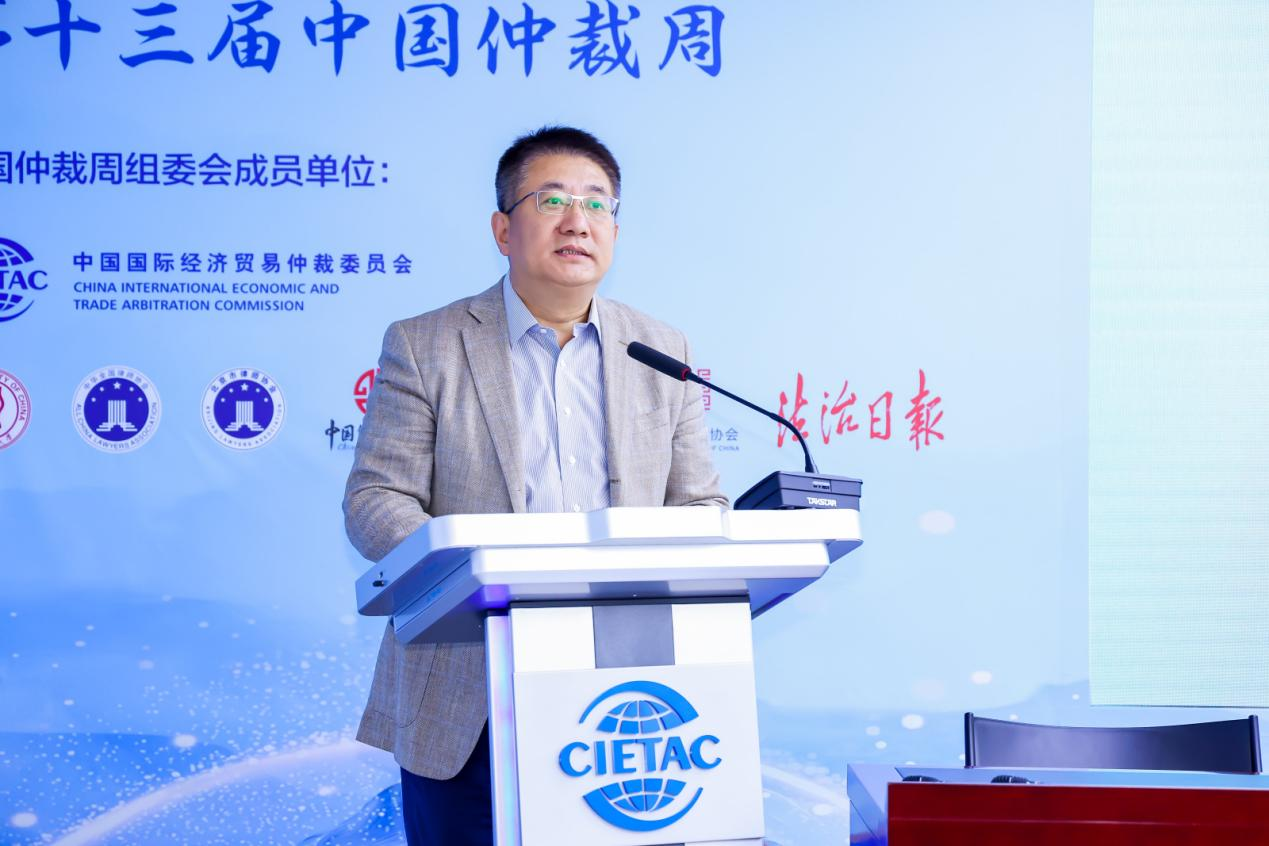
(Shen Weixing, Professor at Tsinghua University School of Law and Vice President of the China Health Law Society)


Shen Weixing, Professor at Tsinghua University School of Law  and Vice President of the China Health Law Society , stated in his remarks that, the healthcare sector carries both the value of life and the well-being of society. Along with the rapid development of the industry, disputes frequently arise in areas such as intellectual property ownership in R&D collaboration, quality issues in equipment procurement, and the applicable law for cross-border services. Arbitration, with its professionalism, flexibility, and confidentiality, has become an important avenue for dispute resolution in this sector. Moreover, the professional development of arbitration represents a law-based response to the “Healthy China” initiative. The China Health Law Society will continue promoting the integration of health law with arbitration practice, and the Medical and Health Committee plays an irreplaceable bridging role in this integration. He expressed his expectations for the Committee to continue contributing high-quality professional achievements to the field.


(Wan Xin, Vice President of the Beijing Lawyers Association, presiding over the opening session)


The event consisted of three sessions, featuring in-depth discussions on three key topics: “Challenges and Dilemmas in Dispute Resolution in Domestic Drug and Medical equipment R&D Cooperation” , “Frontier Issues in Resolving Disputes in Cross-Border Healthcare Investment and Cooperation” and “The Future and Prospects of Arbitration in Healthcare Dispute Resolution.”

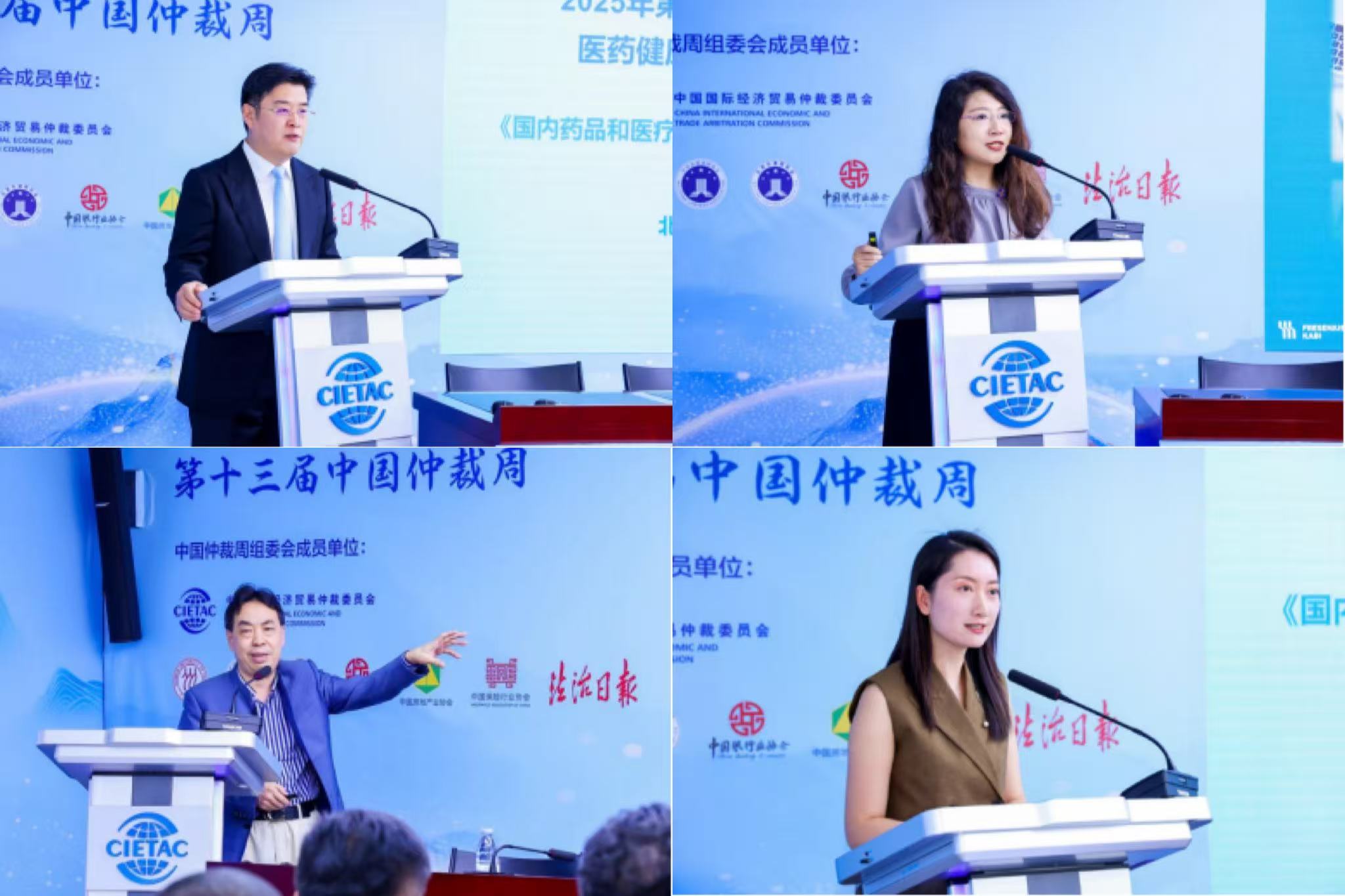
The first panel was chaired by Zhang He, Deputy Director of the Professional Committee of Pharmacy and Health Law of the Beijing Lawyers Association. Dai Xinyue, Head of the Legal Department of Fresenius Kabi (China) Investment Co., Ltd.;  Zhao Zhigang, Director of the Department of Pharmacy at Beijing Tiantan Hospital Capital Medical University ; and Zai Siyu, Lawyer at Beijing Bairui Law Firm , provided a multi-dimensional analysis of key pain points in the industry from the perspectives of corporate practice, medical research, and legal practice respectively, and shared practical solutions correspondingly.


(From left to right and from top to bottom: Mr. Zhang He, Ms. Dai Xinyue, Mr. Zhao Zhigang, and Ms. Zai Siyu.)


The second panel was chaired by Huang Yunyan, Deputy Director of the Professional Committee of Medical and Health Law of the Beijing Lawyers Association. Wang Xiaoyan, General Counsel and Vice President of Clover Biopharmaceuticals ; Hua Yi, Co-Founder and Vice President of YUEWEI Medical Technology; and Li Jiawen, Partner in EY’s  Global Tax Compliance and Reporting Services, drew on their practical experience to share the risks and challenges faced by enterprises expanding overseas, and provided cutting-edge insights and recommendations.


(From left to right and from top to bottom: Ms. Huang Yunyan, Ms. Wang Xiaoyan, Mr. Hua Yi, and Ms. Li Jiawen.)


The third panel was chaired by Gong Nan, Director of the Professional Committee of Medical and Health Law of the Beijing Lawyers Association. Liu Li, Deputy Dean of the School of International Law and the School of Foreign-Related Rule of Law of China University of Political Science and Law ; Zhao Gang, Partner at Zhuhai Hengqin SB Xinchuang Equity Investment Management Enterprise ; and Xu Jingjing, Legal Manager at Sinopharm Healthcare Industry Co., Ltd., engaged in in-depth discussions on industry demand for specialized legal services, legal risk prevention for pharmaceutical enterprises, and the coordination between arbitral and judicial remedies, mapping out future development of arbitration in healthcare disputes.


(From left to right: Ms. Gong Nan, Ms. Liu Li, Mr. Zhao Gang, and Ms. Xu Jingjing.)


The Seminar served as a meaningful bridge for in-depth dialogue between the pharmaceutical industry and the legal community. With discussions closely aligned to current industry hot topics and practical issues in arbitration, the Seminar fostered a relaxed and engaging atmosphere, generated strong positive feedback, and concluded with resounding success.


{{ article.quickLinkTitle ? article.quickLinkTitle : 'Quick Links' }}
Quick Links