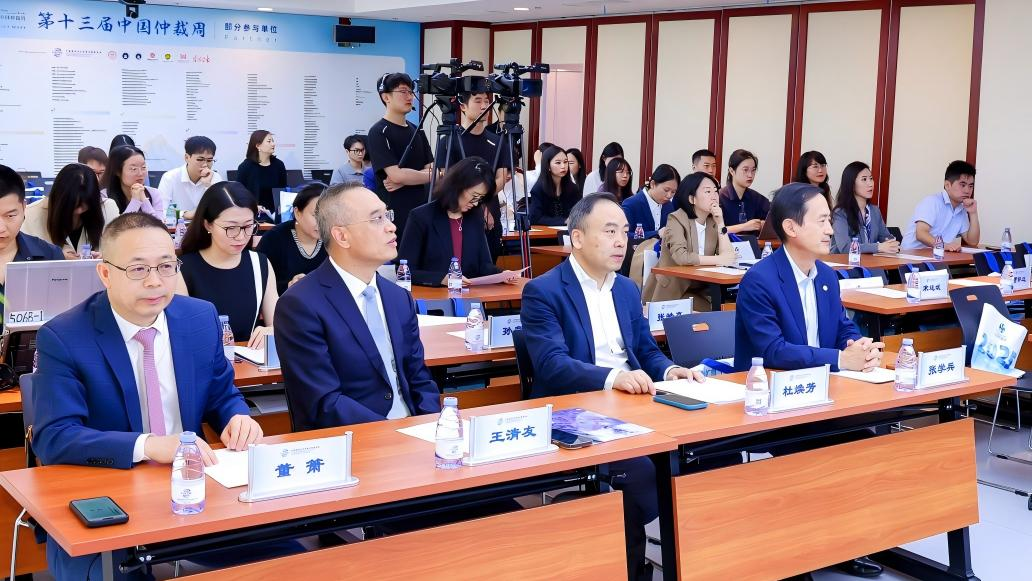
On September 21, 2025, 2025 China Youth Arbitration Forum and the Award Ceremony of the 13th ‘Zhong Lun Cup’ International Commercial Arbitration Essay Competition was held successfully in Beijing. The event was jointly organized by China International Economic and Trade Arbitration Commission (CIETAC), the Law School of Renmin University of China, All China Lawyers Association, Chinese Society of Private International Law, and Beijing Lawyers Association, with co-organization by Zhong Lun Law Firm and the Academy for the Foreign-related Rule of Law at Renmin University of China. Over 100 arbitrators, judges, lawyers, corporate counsel, scholars, and students participated the event onsite, with nearly 5,000 viewers online.


The forum was held in morning and afternoon sessions. The morning agenda included the opening ceremony, keynote speeches, the essay competition award ceremony, and a panel discussion, while the afternoon session featured two thematic discussions and a debate competition.

The opening ceremony was addressed by XIE Changqing, Vice President of CIETAC Arbitration Court, ZHANG Xuebing, Founding Partner of Zhong Lun Law Firm, and Professor DU Huanfang, Dean of Institute for Foreign-related Rule of Law at Renmin University of China and Vice President of the China Society of Private International Law. Keynote speeches were delivered by SHI Hong, Director of the Civil Law Office of the Legislative Affairs Commission of the NPC Standing Committee, and WANG Qingyou, Vice President of All China Lawyers Association. The opening ceremony was chaired by SU Sa, Deputy Director of CIETAC Arbitration Research Institute.


(XIE Changqing, Vice President of CIETAC Arbitration Court, delivered opening remark)


XIE Changqing, Vice President of CIETAC Arbitration Court, noted in her welcome address that China Youth Arbitration Forum is dedicated to nurturing internationally-minded young arbitration talent by offering a platform for dialogue and witnessing the new generation growing into a mainstay of China’s arbitration community. Young practitioners are the driving force behind high-quality development of Chinese arbitration in the current era. She encouraged the young talent to understand international rules with a global vision and solid expertise, demonstrating professional responsibility in foreign-related rule-of-law initiatives and global governance. CIETAC’s development provides young arbitrators with broad access to international best practices, business opportunities and both domestic and overseas professional networks. Looking forward, CIETAC will continue to rally youthful energy and work with all stakeholders to turn China Youth Arbitration Forum into a premier arena for exchanging ideas, sharing experience and advancing careers, jointly propelling Chinese arbitration into a new height of quality development. 


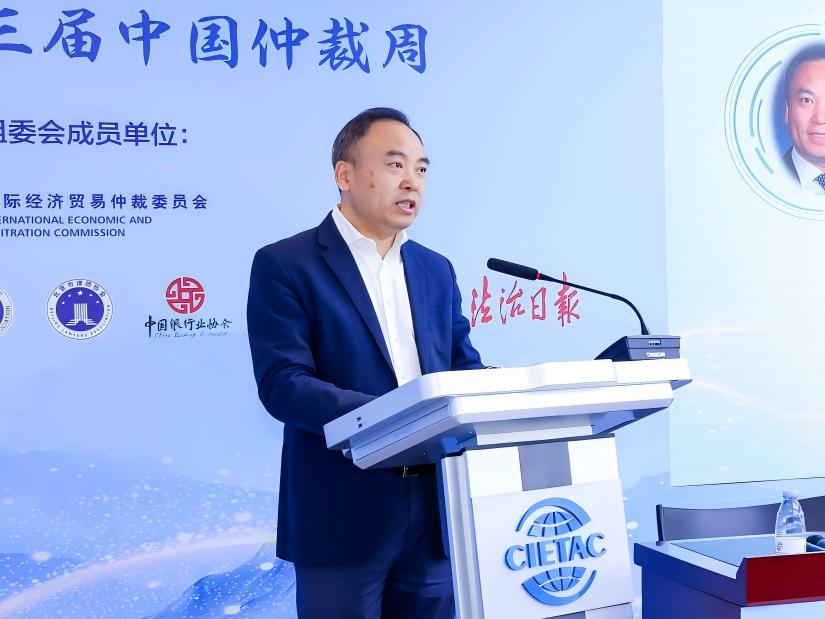
(ZHANG Xuebing, Founding Partner of Zhong Lun Law Firm, delivered opening remark )


ZHANG Xuebing, Founding Partner of Zhong Lun Law Firm, said in his opening remarks that Zhong Lun Law Firm has sponsored the ‘Zhong Lun Cup’ International Commercial Arbitration Essay Competition for 13 consecutive years. Many former contestants have become backbone professionals across diverse legal fields. Over the past two decades, Chinese lawyers—especially the younger generation—have played an increasingly prominent role in international commercial arbitration, deftly applying global rules to safeguard the lawful rights and interests of Chinese enterprises and parties in overseas cases. He expressed hope that the Forum and the essay competition will identify and attract more young legal talent to arbitration, allowing them to demonstrate their full capabilities on the arbitral stage.


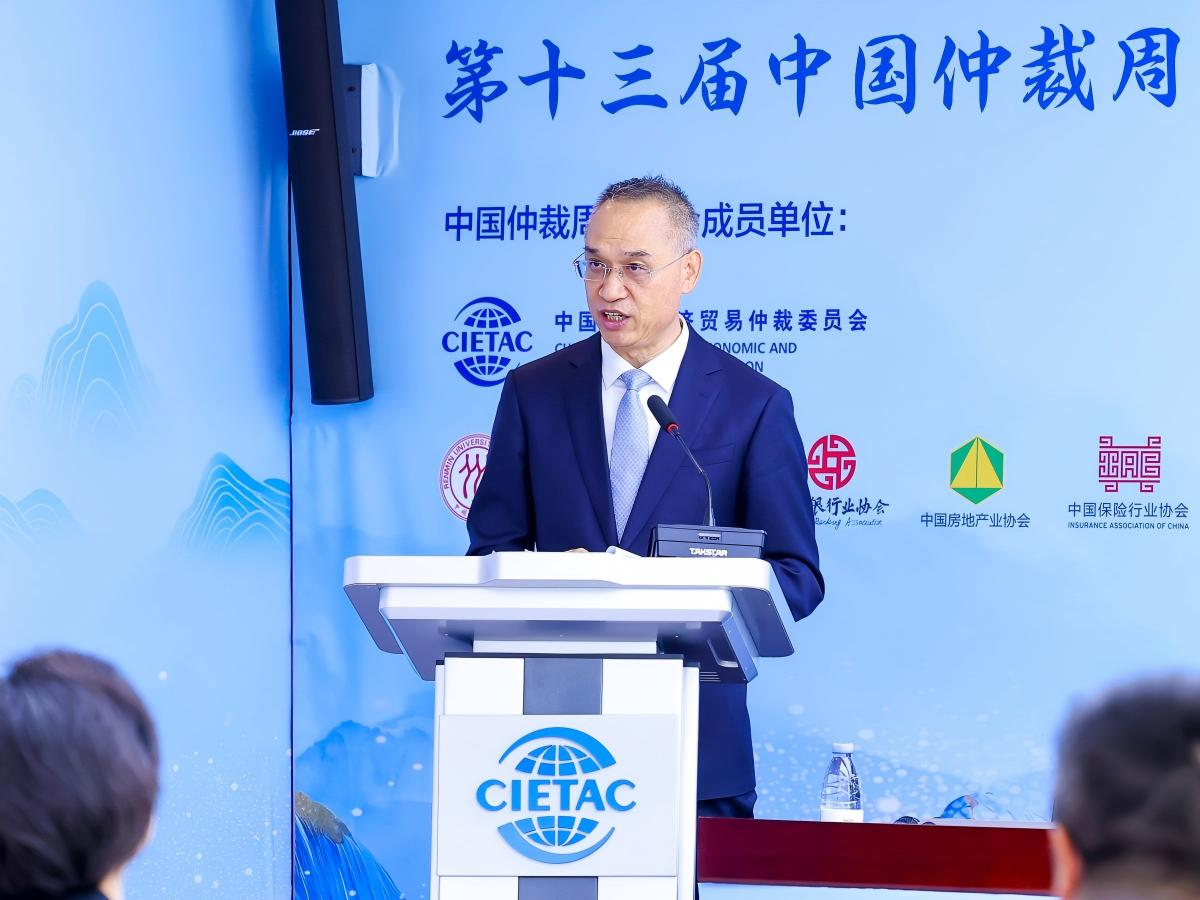
(Professor DU Huanfang, Law School of Renmin University of China, delivered opening remarks )


Professor DU Huanfang, Dean of Institute for Foreign-related Rule of Law at Renmin University of China and Vice President of the China Society of Private International Law, pointed out that the development of Chinese arbitration depends on successive generations. In an era of unprecedented global changes in a century, Chinese arbitration practitioners should harbour both vision and ambition, asking how they can become a driving force in foreign-related rule-of-law construction and thus advance international trade, high-quality Chinese economic development and wider opening-up. They must also possess confidence and resolve to keep refining the arbitration system and devote themselves to turning China from a major arbitration user into an arbitration power. Finally, they need persistence and action, constant reflection, simultaneous study and practice, sustained effort and steady, solid steps toward building China’s international commercial arbitration hub. 


(SHI Hong, Director of the Civil Law Office of the Legislative Affairs Commission of the NPC Standing Committee, delivered the keynote speech)


In the keynote speech session, SHI Hong, Director of the Civil Law Office of the Legislative Affairs Commission of the NPC Standing Committee, addressed the newly amended Arbitration Law. He described the revision as a landmark step: an imperative for implementing the Party Central Committee’s decisions, an inherent need to give full play to arbitration in dispute resolution and foster a sound business environment, an objective response to longstanding practical problems and enhancing the credibility of arbitration, and a key move to strengthen foreign-related rule of law and provide legal safeguards for cultivating world-class arbitration institutions and making China a premier seat for international commercial arbitration. He outlined the principal changes: setting out the overarching requirements for developing arbitration, improving rules on foreign-related arbitration, ad-hoc arbitration, internal governance of arbitration institutions and arbitrator qualifications, reinforcing court support for arbitration, and advancing China-featured arbitration innovations that align with international rules. Young arbitration practitioners, he concluded, must grasp the core points of the amended Act, apply it conscientiously and ensure its faithful implementation in practice.


(WANG Qingyou, Vice President of All China Lawyers Association, delivered the keynote speech)


WANG Qingyou, Vice President of All China Lawyers Association, delivered a keynote entitled ‘Salute to Young Arbitrators, focusing on the core qualities the next generation must possess. He said that young generations of arbitrators, counsel and case managers must cultivate an impartial mind in applying methods and developing competence, and explained in detail what each entails. The future of arbitration belongs to the young, he stressed, they must fasten the first button in their career by choosing the right direction and values, seize every opportunity to sharpen their expertise and uphold professional ethics, and thereby raise China’s international competitiveness in arbitration. He called on young practitioners to forge a strong community consciousness, temper their character and capacity, and act as promoters of arbitration development, guardians of parties’ lawful rights, and sentinels of integrity within the arbitration community.


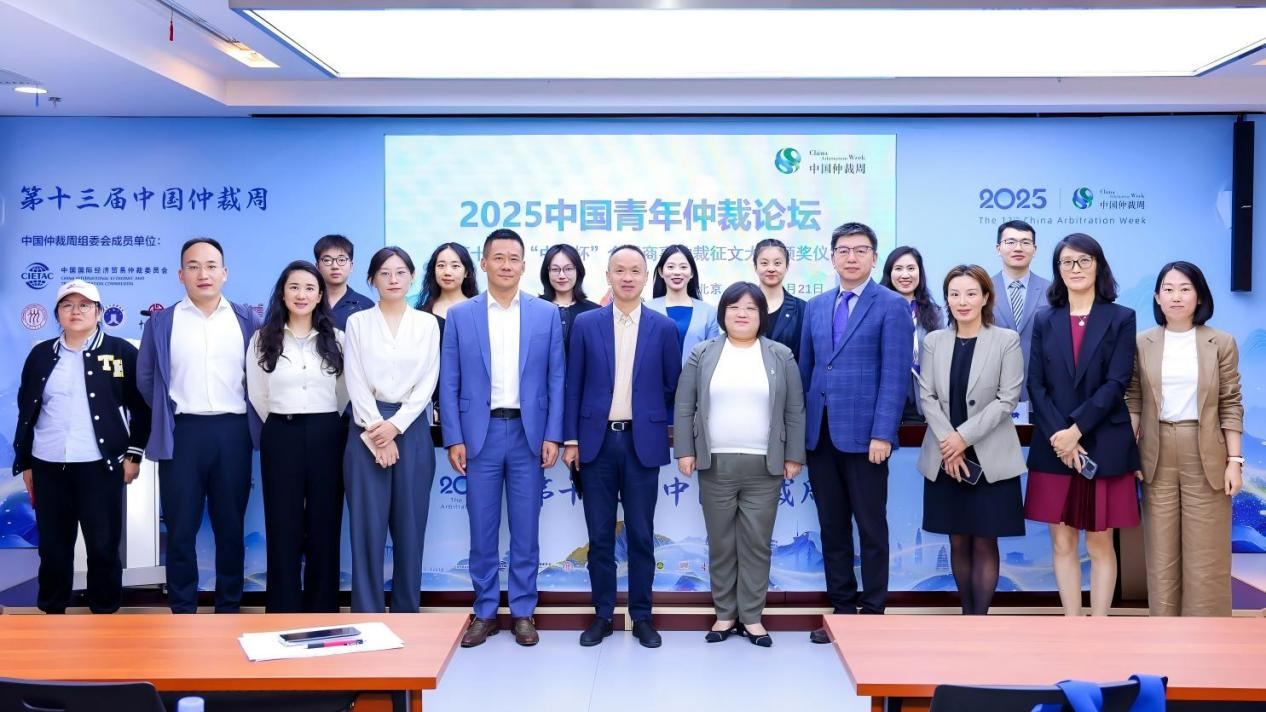
At the ceremony for the 13th ‘Zhong Lun Cup’ Essay Competition on International Commercial Arbitrationd, winning authors received their awards and joined the presenters for a group photo.


The forum then moved to its first panel, “Effect and Limits of Service of Arbitration Documents”, moderated by ZHANG Ye, former Director of Case Administration Department of CIETAC.


ZHANG Haoliang, Director of Business Development (International Cases) at the Beijing Arbitration Commission, reminded the audience that, from an institution’s standpoint, service is essentially about ‘reasonable notice’, not actual receipt. JIA Huaiyuan, Senior Partner at DeHeng and Head of DeHeng Middle East office, focused on service, enforcement and applicable law in the Middle East—especially Saudi Arabia—where courts insist on ‘actual receipt’ rather than deemed service. SUN Yanchen, Senior Consultant at Hylands Law Firm (Hong Kong), stressed that arbitrators must monitor the entire service process and any subsequent enforcement, stepping in promptly to solve procedural issues. Associate Professor QIN Huaping, Director of the Private International Law Institute at China University of Political Science and Law, mapped out the types of documents, the obligations of serving parties, standards for valid service, its scope and the limits of party autonomy. JIANG Yujuan, Partner at Zhong Lun, from counsel’s perspective, surveyed recurring service pitfalls and noted that the new Arbitration Act encourages ‘service by reasonable means’, inviting further exploration of electronic service to boost efficiency.


Panel II focused on ‘Latest Trends in Judicial Review of International Arbitration’, was moderated by DONG Xiao, Partner at JunHe Law Firm.

MEI Yu, Deputy Chief Judge of Beijing International Commercial Court, referred to recent cases and the amended Arbitration Law to illustrate how people’s courts balance support for arbitration with restrained supervision. CHEN Xijia, Managing Lawyer at Chen & Chang, analysed two high-value Taiwan-related arbitration judicial review proceedings, emphasizing the tribunal’s duty to safeguard each party’s right to be fully heard. Associate Professor CHEN Jianling from University of International Business and Economics examined the impact of Article III of the New York Convention on the recognition and enforcement of foreign awards, drawing on fresh judicial-review decisions. ZHU Huafang, Partner at HuiZhong, discussed court practice on arbitration-related evidence orders under the revised Act. Finally, Brad WANG, Deputy Secretary-General of CIETAC Hong Kong, surveyed recent Hong Kong case law on the validity of arbitration agreements, annulment and refusal of enforcement, flagging practical pitfalls.


A debate followed on ‘AI in Arbitration: Enhancing Predictability or Undermining Credibility?’ Presided over by PENG Zhu, Partner at FangDa (Beijing). Speaking for the motion, LI Siyang, Partner at Commercial and Finance Law Firm, ZHANG Daiying, Consultant at JingTian & GongCheng and LI Jiankun, assistant professor at CUPL, argued that big-data analytics can increase foreseeability and thus finality of awards. The opposing team is composed of WU Zhenguo, Lecturer of Department of Law at University of Science and Technology Beijing, LI Jilong, Lawyer at JunHe Law Firm and JIN Zixin, Lawyer at King & Wood Mallesons—countered that algorithmic over-reliance risks entrenching judicial mind-sets and ignoring case-specific justice. After lively exchanges, Ms. PENG commended both sides and observed that AI integration is inevitable; the task is to regulate and harness it to advance high-quality arbitration in China.

Panel III turned to ‘Training Foreign-Related Legal Talent under the Dual-Circulation Education Model’, chaired by Professor SONG Lianbin of CUPL.


MOU Yucheng, Senior Officer at the Ministry of Justice, outlined recent MOJ initiatives on foreign-related arbitration talent, underscoring its centrality to resolving cross-border disputes. Associate Professor ZHANG Qikun of CUFE stressed the need for interactive teaching—case studies, moots and internships—to bridge classroom and practice. XU Qianqian, Assistant General Counsel at China State Construction, mapped corporate career paths against the revolutionary, standardized, professional and vocational benchmark for legal staff. YANG Chen, Managing Partner of JT&N, listed the attributes of an outbound lawyer: diligence, critical and logical thinking, leadership, language skills, global vision and patriotic responsibility. PAN Chujing, senior case manager of CIETAC Arbitration Research Institute, shared CIETAC’s multi-layer programs—branded competitions, university courses, student internships, practitioner mentors and continuing training—to cultivate foreign-related legal talent.

Closing remarks were delivered by SU Sa, Deputy Director of the CIETAC Arbitration Research Institute. She thanked speakers, delegates and staff, praised the forum’s vibrant content, and noted that arbitration stays alive by keeping pace with the times, with youth as the most dynamic carrier of innovation. The forum’s exploration of arbitration, she said, will never cease.


The forum concluded amid in-depth reflection and lively exchange. By forging a bridge for cutting-edge ideas and giving young practitioners a platform to showcase expertise, absorb experience and connect with top resources, the event has seeded a new generation of internationally minded, battle-ready talent, injecting sustained youthful momentum into China’s journey from a major arbitration country to a leading arbitration power.

{{ article.quickLinkTitle ? article.quickLinkTitle : 'Quick Links' }}
Quick Links