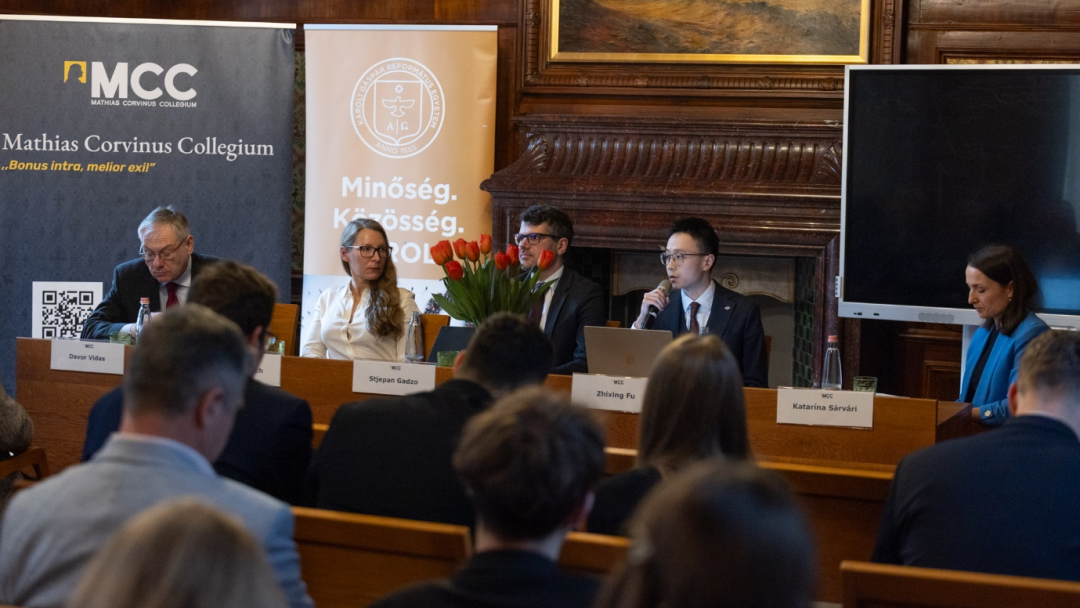
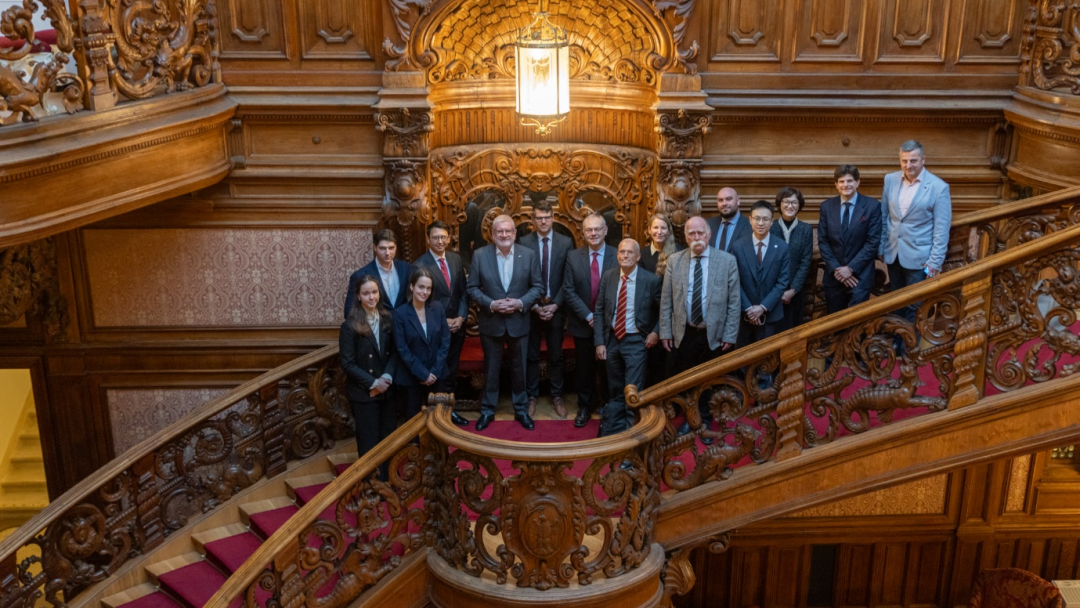
On February 19, 2026, the China International Economic and Trade Arbitration Commission (CIETAC) was invited to participate in the academic symposium titled “Climate Change and Its Legal Consequences” held in Budapest, Hungary. Fu Zhixing, Assistant Secretary-General of the CIETAC European Arbitration Center, attended the event on behalf of CIETAC and delivered a speech on “Climate Change and Commercial Arbitration.”

At the conference, Fu Zhixing systematically analyzed the interplay between climate change disputes and commercial arbitration. He noted that with the continuous strengthening of domestic regulations, the ongoing development of green finance, and the expanding scope of supply chain compliance responsibilities, climate change risks are gradually evolving from environmental issues within the traditional realm of public law into critical factors that directly impact the performance of commercial contracts and corporate decision-making. Against this backdrop, he highlighted the institutional advantages of commercial arbitration in resolving contract disputes involving climate-related factors, including specialized adjudication mechanisms, the relative confidentiality of proceedings, and the enforceability of cross-border awards. He also objectively analyzed the practical challenges confronting commercial arbitration when addressing highly technical and climate disputes intertwined with public policy factors.


In response to the common issue of “procedural fragmentation” in commercial disputes related to climate policies, Fu Zhixing, in light of CIETAC’s rules revisions and practical experience in the recent years, introduced the explorations and improvement of institutional arrangements such as multi-contract arbitration, joinder of additional contracts and consolidation of arbitrations. He demonstrated the institutional framework and practical approaches that CIETAC has established to address complex and highly interrelated commercial disputes.

Furthermore, Fu Zhixing drew upon Chinese legislation and arbitration practice to elaborate on the application logic of the “green principle” in the Civil Code in the determination of contract validity, as well as the relationship between force majeure rules and changes in climate policies under specific circumstances, thereby providing a practical perspective for understanding the interaction between climate change and commercial disputes in the Chinese context.

The symposium brought together legal experts and practitioners from multiple countries. In addition to representatives from CIETAC, attendees included Anikó Raisz, State Secretary for Environmental Affairs of Hungary; Professor Péter Kovács, Former Judge of the International Criminal Court; Ambassador Mitch Fifield, former Permanent Representative of Australia to the United Nations; and representatives from a number of academic and research institutions, including the University of Lausanne and Nagoya University.


{{ article.quickLinkTitle ? article.quickLinkTitle : 'Quick Links' }}
Quick Links