To implement the national digital economy development strategy and support the building of Digital China, on March 18, 2026, China International Economic and Trade Arbitration Commission (CIETAC) officially established the Digital Economy Arbitration Center, released the research report titled Legal Safeguards and Dispute Resolution in the Digital Economy, and successfully held the themed exchange event titled Digital Intelligence Empowers Development; Arbitration Safeguards the Future. Nie Wenhui, Vice Chairman of China Council for the Promotion of International Trade (CCPIT), attended the event and delivered remarks. Wang Chengjie, Vice Chairman & Secretary General of CIETAC, presided over the event.

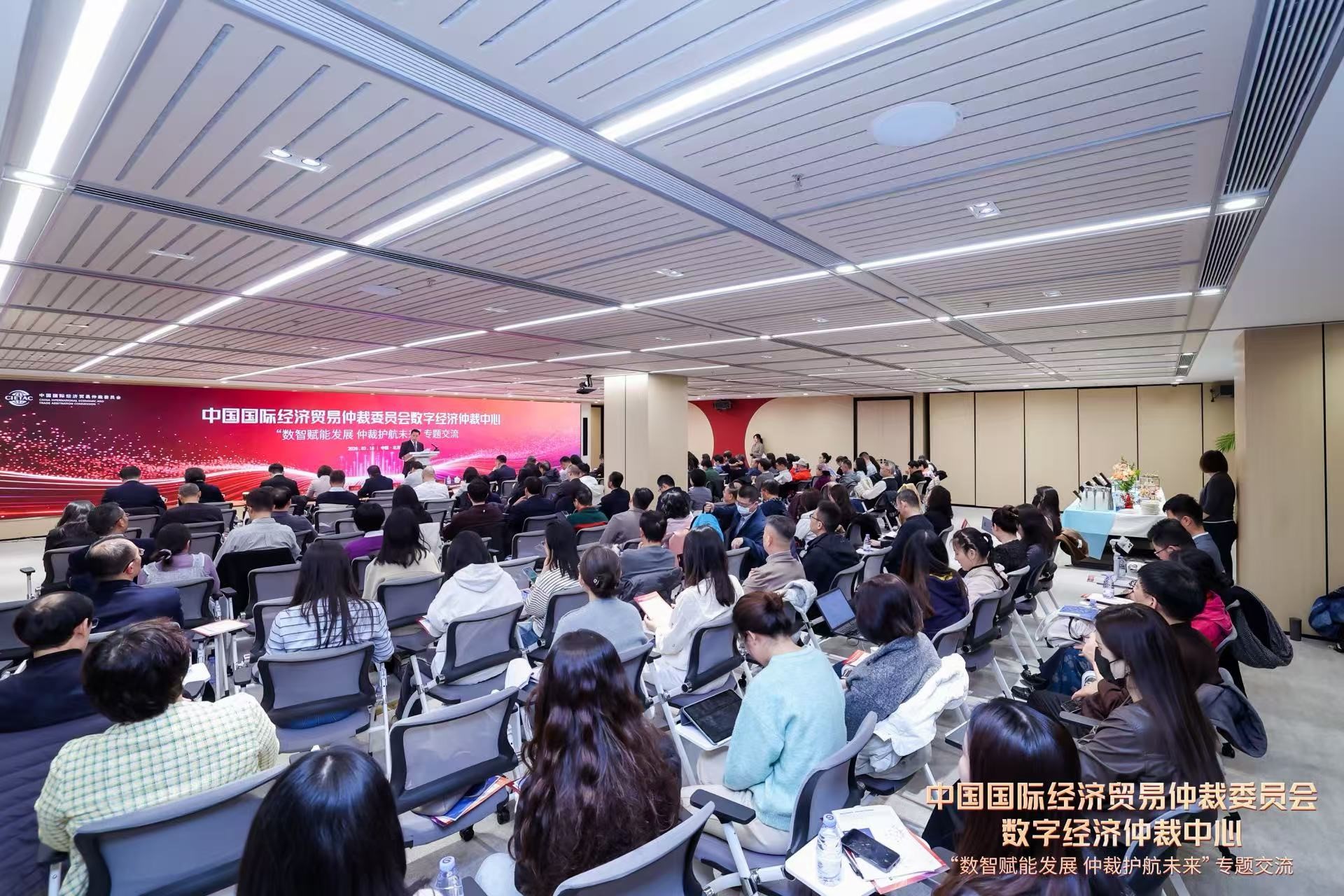
The event was held at a high level, featuring a distinguished lineup and strong institutional representation. It stood out as a highly authoritative and professional forum in China’s digital economy landscape, bringing together leading experts, scholars, and industry pioneers with significant academic influence, sectoral leadership, and practical expertise. Participants represented a wide range of key stakeholders, including national think tanks, renowned universities, research institutions, national-level data trading platforms, major central state-owned enterprises, and professional service organizations. The event epitomized the authoritative forces and cutting-edge standards currently shaping China’s digital economy. Over 200 participants attended the event, including representatives from relevant regulatory authorities, judges, arbitrators, scholars, lawyers, and corporate legal counsels.


(event site)


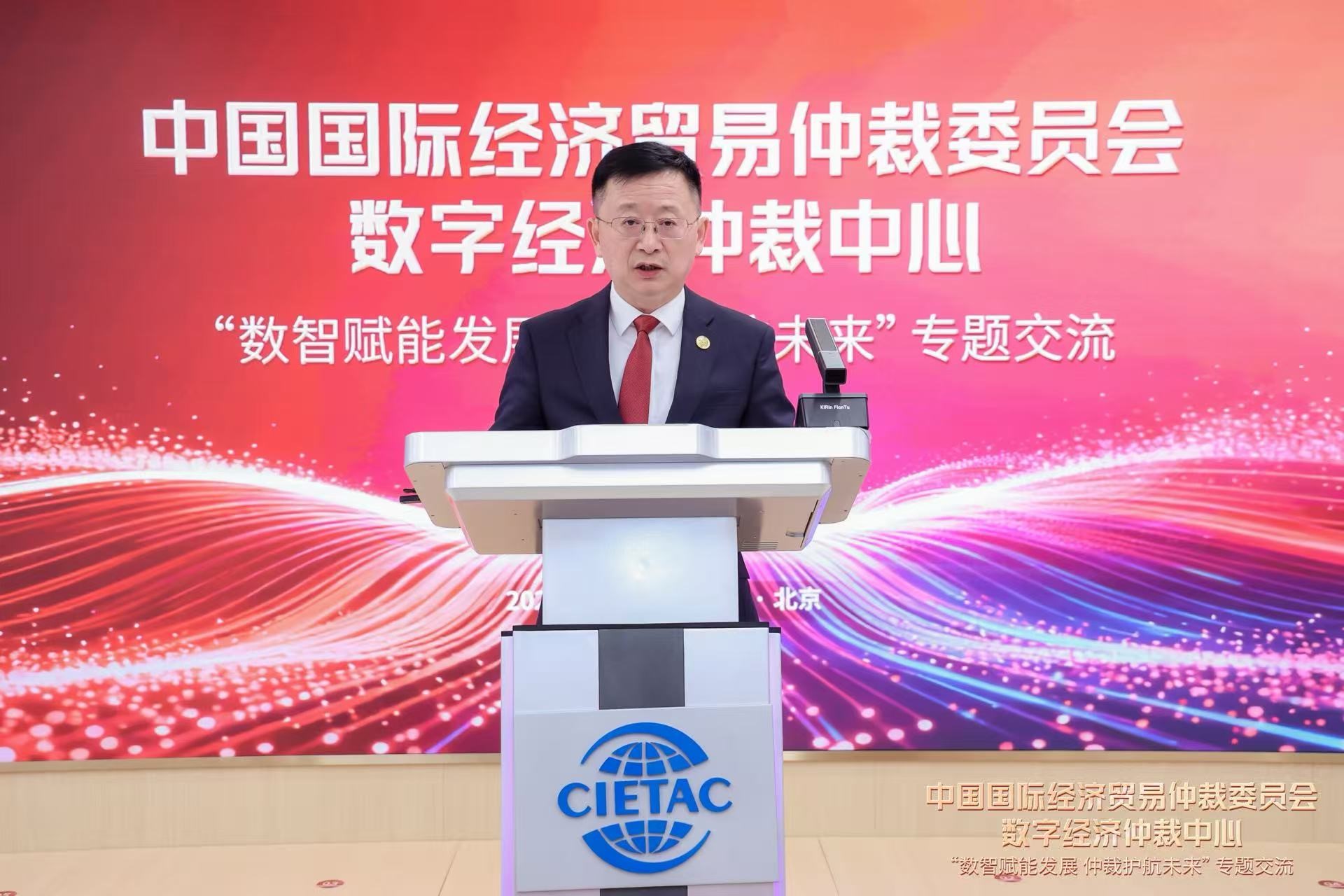
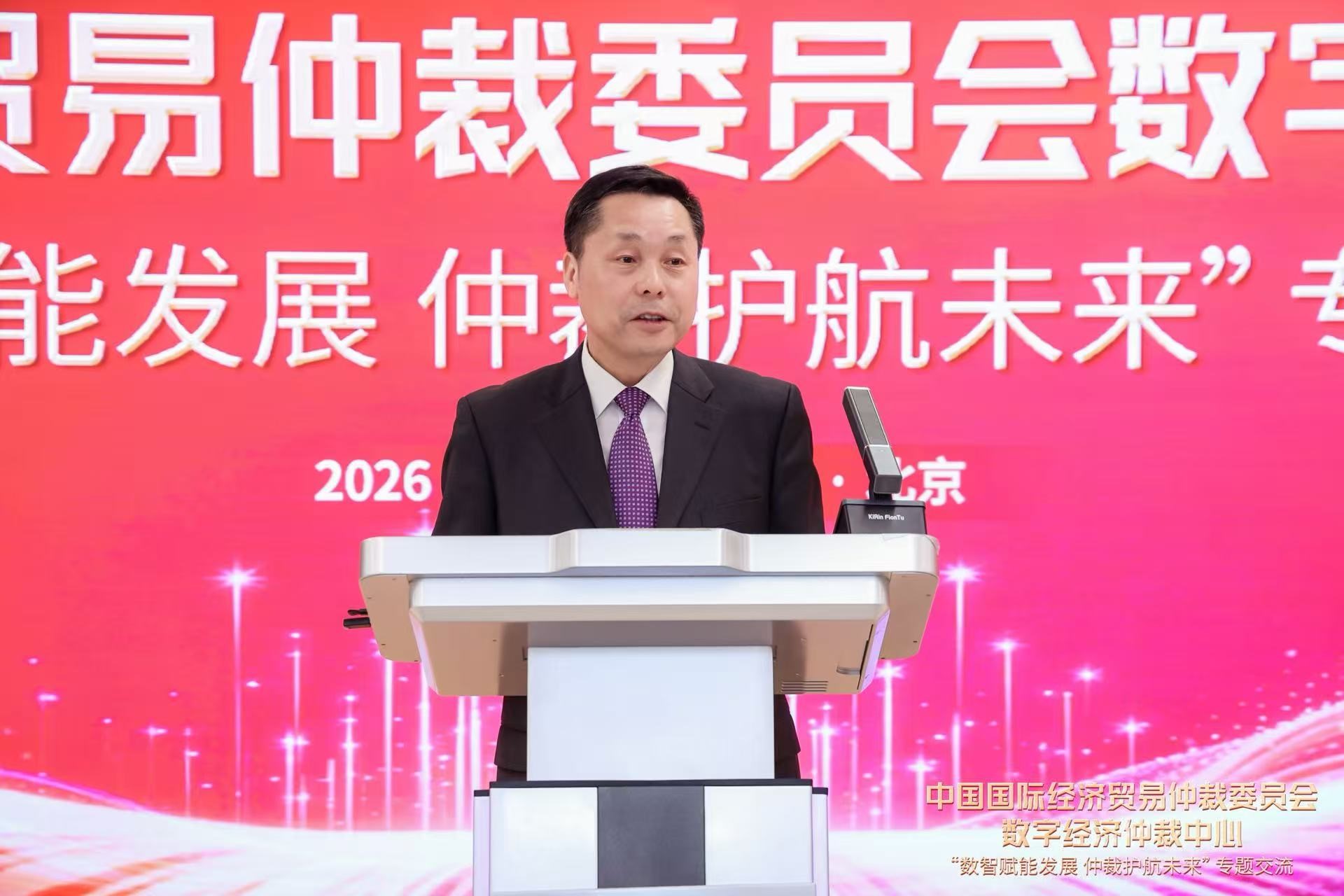
In his opening remarks, Nie Wenhui noted that the world today is marked by marked by intertwined changes and growing instability, with frequent trade frictions and a continuous rise in international commercial disputes. As a result, demand for specialized and internationalized arbitration services is increasing steadily. The rapid development of the global digital economy and artificial intelligence has given rise to a large number of new types of commercial disputes , making the development of digital economy arbitration particularly timely. At the same time, the deep integration of artificial intelligence with the rule of law also offers new directions for enhancing the quality and efficiency of arbitration. Against this backdrop, the establishment of the Digital Economy Arbitration Center and the advancement of specialized arbitration services in the digital economy come at an opportune moment.. As China’s first foreign-related arbitration institution, CIETAC has consistently played the leading role in the development of arbitration and has achieved notable progress in digital transformation. He suggested that the Digital Economy Arbitration Center should align itself with the Digital China strategy, conduct in-depth research on legal issues and dispute patterns related to the digital economy, and improve rules and mechanisms; actively leverage artificial intelligence technology to advance smart arbitration and optimize online arbitration services. In addition, it should strengthen both domestic and international cooperation, promote the exchange of rules and mutual learning from practices, and strive to build a world-class dispute resolution platform serving the global digital economy.


(Vice Chairman Nie Wenhui delivered the remark)


The leaders and guests in attendance jointly witnessed the establishment of CIETAC Digital Economy Arbitration Center. The establishment of the Center represents a significant initiative by CIETAC to align with the trends of the digital age, contribute to the development of the digital economy governance framework, and enhance its professional capacity in dispute resolution within the digital domain. Positioned as a professional, internationally-oriented, and forward-looking institution, the Center aims to build a comprehensive digital economy dispute resolution service system. It will prioritize disputes in emerging fields such as data transactions, platform governance, and artificial intelligence, providing efficient, impartial, and convenient arbitration services. The establishment of the Center holds significant importance for strengthening the legal framework in the digital sector, optimizing the digital business environment, and enhancing China’s international competitiveness in digital economy dispute resolution. It will further leverage the unique advantages of commercial arbitration in digital economy governance, laying a solid legal foundation and injecting professional momentum into the high-quality development of the digital economy.


As the first foreign-related arbitration institution in China established pursuant to a decision by the State Council of the People’s Republic of China, CIETAC has always regarded serving the nation’s strategic development as its mission. It attaches great importance to the construction of a Digital China. Three years ago, CIETAC formed a high-caliber research team to initiate relevant studies and specially invited Professor Wang Wei, aCIETAC arbitrator and Director of the Civil, Commercial, and Economic Law Division at the School of Law and Politics of the Central Party School (National Academy of Governance)—to serve as the head of the research team. To ensure that the research findings precisely address the practical needs of dispute resolution in the digital economy while maintaining both authority and practicality, the research team drew extensively on expertise from government, academia, and research institutions. It brought together experts and scholars from the National Judges College, the China Judicial Big Data Research Institute, Institute of Prosecutorial Theory of the Supreme People’s Procuratorate, the School of Law of the China People’s Public Security University, the Research Office of the Zhejiang Provincial Higher People's Court, among other authoritative institutions. Grounded in the broader context of national governance and closely aligned with the cutting edge of digital rule of law, the team conducted multiple rounds of field research, thematic seminars, and meticulous refinement. This culminated in a high-quality research report of nearly 150,000 words titled Research on Legal Safeguards and Dispute Resolution in the Digital Economy: An Analysis Focusing on Commercial Arbitration.

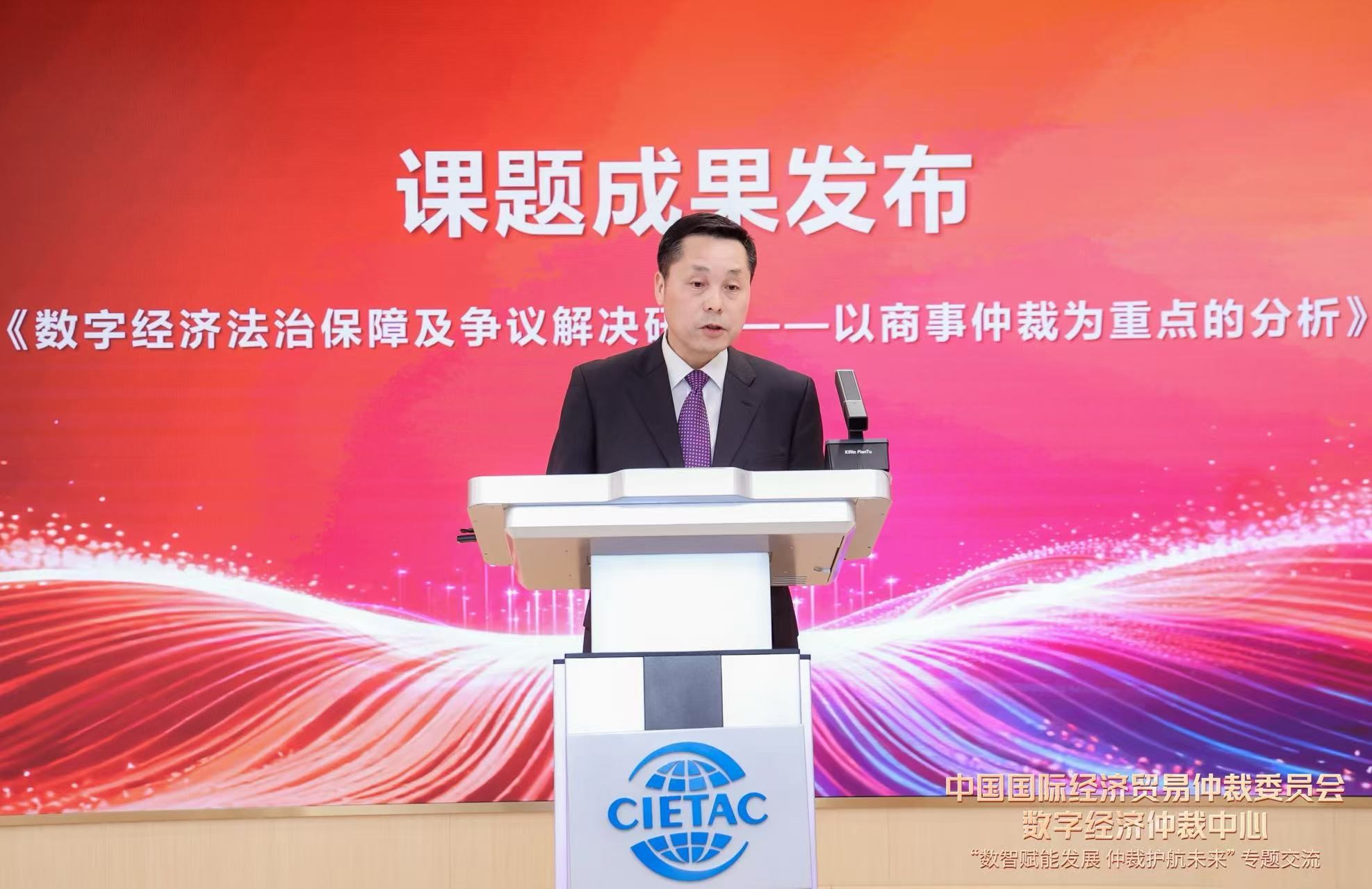
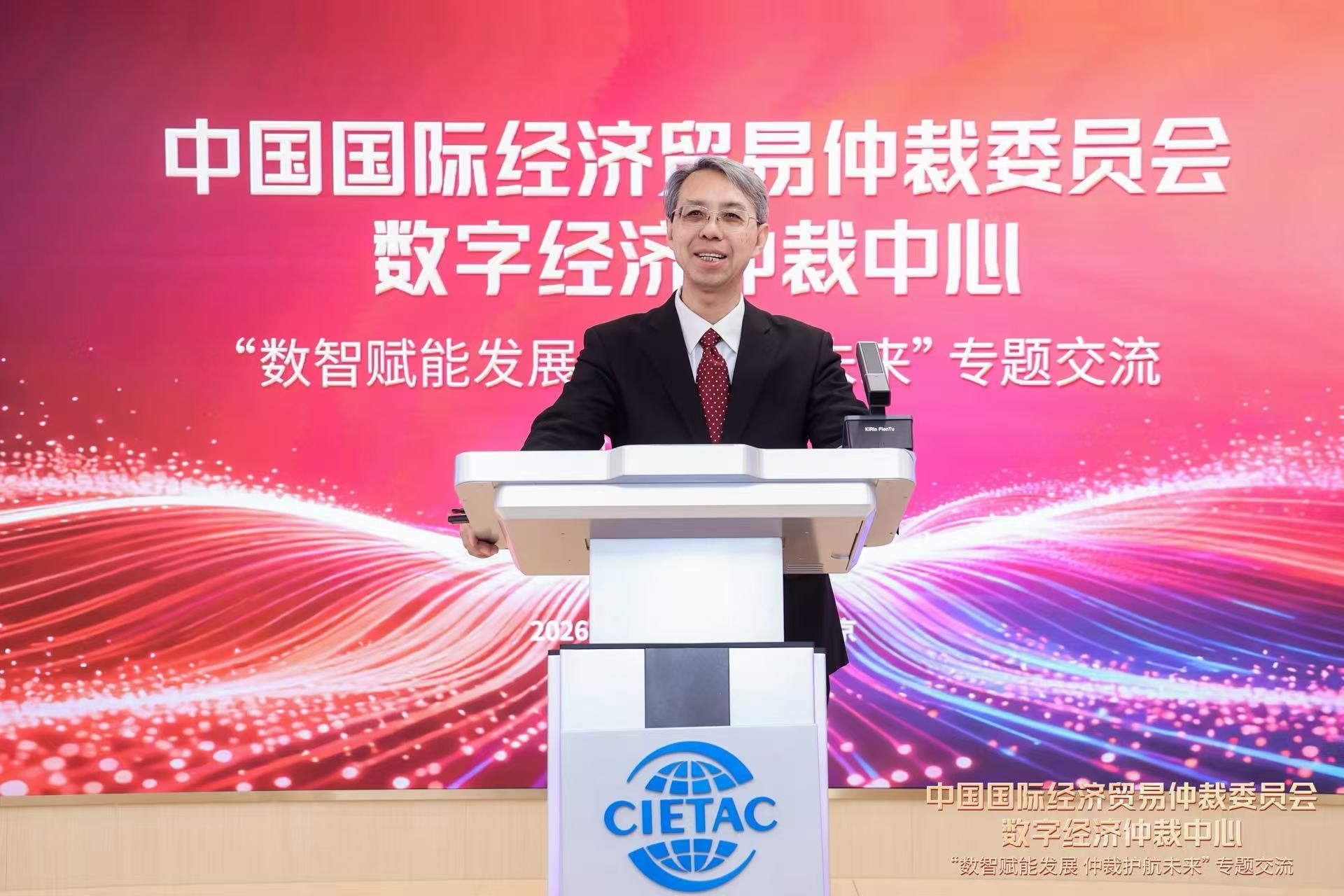
At the event, Secretary General Wang Chengjie and Professor Wang Wei jointly released the research report. Secretary-General Wang Chengjie noted that this report is the first systematic and specialized research report in the field of digital economy arbitration in China, filling a gap in specialized research in this area domestically and serving as a pioneering and benchmarking document. The preparatory work for this research project began early and was thoroughly planned; it is grounded in the broader context of national governance and closely aligns with the cutting-edge developments in digital rule of law. The report not only addresses the current practical needs for legal safeguards in the digital domain but also accurately forecasts industry trends. It provides theoretical support for the resolution of commercial disputes in the digital economy that is both forward-looking and practical, using theoretical innovation to guide practical exploration and laying a solid theoretical foundation for the smooth establishment of the Digital Economy Arbitration Center. Professor Wang Wei provided an in-depth interpretation of the report’s core content, focusing on its fundamental positioning and overall research framework. He systematically expounded on the concepts and legal framework for legal safeguards in the digital economy, highlighting substantive issues in civil and commercial dispute resolution in the digital era, the digital and intelligent transformation of dispute resolution mechanisms, and the prospects for reform and innovation in commercial arbitration. He elaborated on a series of key perspectives and policy recommendations derived from the research.


(Secretary General Wang Chengjie presented the research report)


(Professor Wang Wei presented the keynotes of the report)


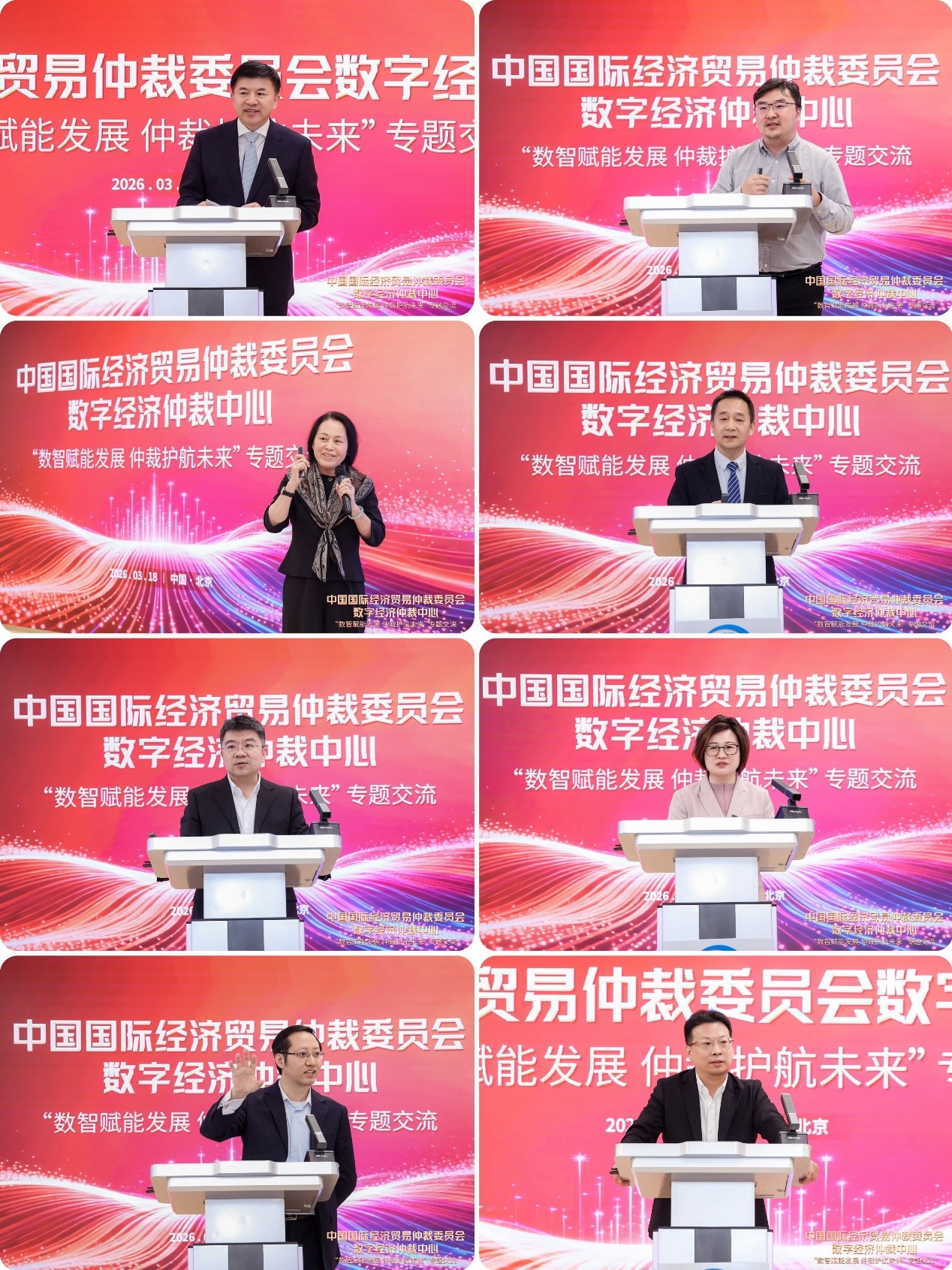
The panel discussion featured presentations by industry experts including Wang Chen, Chief Engineer at the National Engineering Research Center for Big Data System Software at Tsinghua University; Li Aijun, Dean of the Internet Finance Law Research Institute at China University of Political Science and Law; Li Denggao, Deputy General Manager of the Shanghai Data Exchange; Ye Hanghui, Ecosystem Director at the Beijing Data Institute of Beijing Data Group; Guo Li, Chief Scientist at China Electronics Data Industry Group; Chen Lijie, National Partner in Charge of Financial Data Consulting at KPMG Enterprise Consulting (China) Co., Ltd.; and Han Kaichuang, Arbitrator at CIETAC. The speakers addressed topics including ‘Data Property Rights and Derived Data’‘Data Disputes and Arbitration’ ‘Industry Observations and Reflections from the Perspective of Data Circulation’‘Enhancing Data Security Governance Capabilities to Promote High-Quality Development of the Data Factor Market’ and ‘Compliant Operation of Data Assets in the Digital Economy Era’ They focused on cutting-edge issues such as the establishment of data property rights systems, the market-oriented circulation of data factors, data security and compliance governance, the inclusion of data assets in financial statements and their compliant operation, the integration of digital technology and legal applications, and the resolution of cross-border data disputes. From diverse perspectives—including technical logic, legal regulation, market practice, and international rules—they conducted an in-depth analysis of the new characteristics, trends, and challenges in legal system development and dispute resolution in the digital economy era. Their contributions helped build consensus and provide insights for establishing a dispute resolution system suited to the development of the digital economy.


(From top to bottom, left to right: Wang Zhengzhi, Wang Chen, Li Aijun, Li Denggao, Ye Hanghui, Guo Li, Chen Lijie, Han Kaisheng.)


In his concluding remarks, Secretary General Wang Chengjie stated that as the “national team” of arbitration in China, the establishment of CIETAC Digital Economy Arbitration Center, together with the release of a dedicated research report represents important measures to align with the broader trends of the digital economy, addresses the challenges and serve the high-quality development of the digital economy. Regarding the promotion of high-quality development in digital economy dispute resolution, he put forward four proposals. First, to strengthen rule-based guidance by leveraging CIETAC’s 2024 Arbitration Rules, ensuring precise adaptation to new business models and formats in the digital economy and providing solid rule support for complex, emerging digital disputes. Second, to adhere to a “technology + law” dual-drive approach, drawing on CIETAC’s panel of 1,881 arbitrators worldwide while actively bringing in interdisciplinary, high-level talent in the digital economy to meet the diverse and specialized needs of digital dispute resolution. Third, to highlight the cross-border service capabilities by leveraging CIETAC’s global arbitration service network and mature cross-border dispute resolution mechanisms to efficiently and conveniently resolve cross-border disputes involving digital trade and data flows. Fourth, to balance efficiency with risk management by utilizing CIETAC’s self-developed smart arbitration platform to enable fully online dase management, and by standardizing the application of technology through the Guidelines on the Use of Artificial Intelligence Technology in Arbitration (Trial Version)—the first of its kind in the Asia-Pacific region—to achieve an organic integration of digital empowerment and risk prevention.

Secretary General Wang Chengjie emphasized that in the future, CIETAC Digital Economy Arbitration Center will continue to deepen digital and intelligent empowerment, strengthen professional support, and expand international cooperation. Building on the Joint Action Plan for Promoting the Development of International Arbitration in the Digital and Intelligent Era—which was initiated by CIETAC and endorsed by 74 international organizations and dispute resolution institutions worldwide—the Center will deepen collaboration with the international industry and pool collective efforts to jointly improve the ecosystem for digital economy dispute resolution, and to provide higher-quality and more efficient arbitration services to promote the healthy and orderly development of the digital economy and serve the national digital economy strategy.


(Secretary General Wang Chengjie gave the closing remark)


Participants agreed that the event was high-level, professional, and pragmatic, closely aligned with the forefront of industry developments. The discussions were dynamic and in-depth, with active engagement throughout, yielding productive exchanges and a strong positive response from the community.

Taking the establishment of the Digital Economy Arbitration Center as a new starting point, CIETAC will continue to advance the high-quality development in the digital economy sector, deepen international exchanges and cooperation, build broader global consensus, jointly explore new pathways for resolving digital economy disputes, share the achievements of digital and intelligent arbitration, and jointly establish a legal safeguard system, thereby making greater contributions to promoting the healthy and orderly development of the digital economy.

{{ article.quickLinkTitle ? article.quickLinkTitle : 'Quick Links' }}
Quick Links