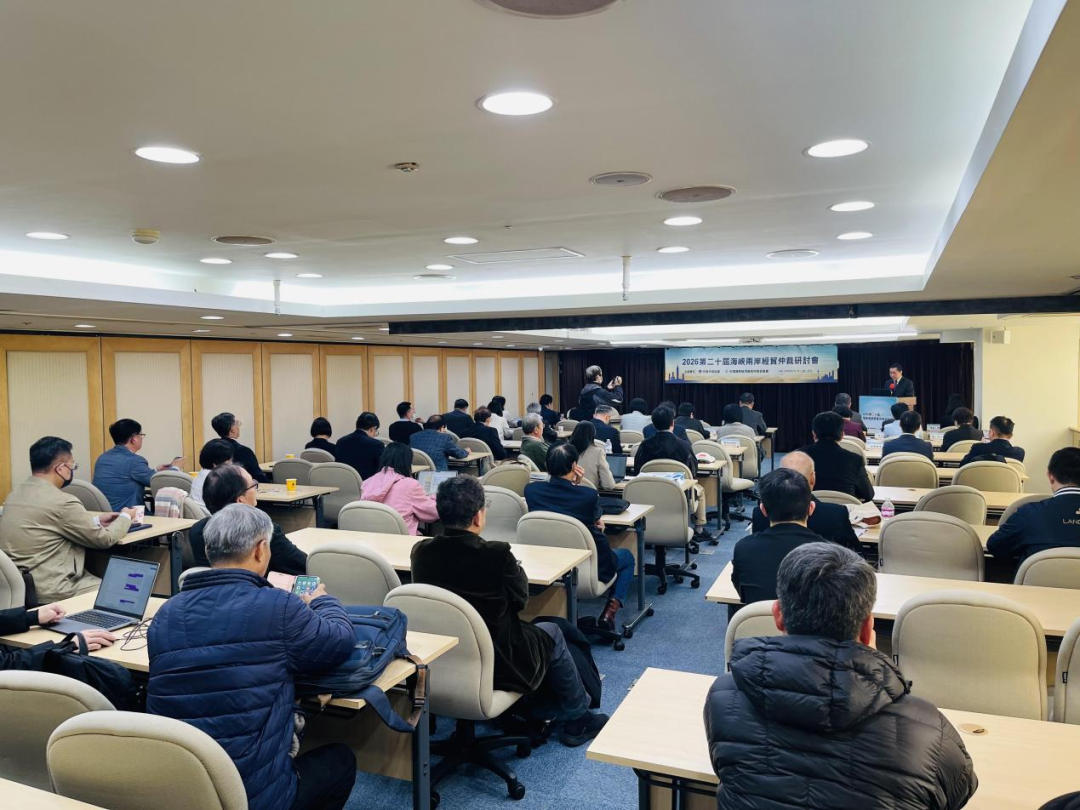
On the morning of February 4, the 20th Cross-Strait Economic and Trade Arbitration Symposium, co-hosted by the China International Economic and Trade Arbitration Commission (CIETAC) and the Taiwan Chinese Arbitration Association  (TAIWAN CAA)  was successfully held in Taipei. Wang Chengjie, Vice Chairman and Secretary-General of CIETAC , and Wu Yeong-Chyan, Chairman of TAIWAN CAA , attended the opening ceremony and delivered speeches. Attendees also included the CIETAC delegation, along with Li Fudian, Honorary Chairman of TAIWAN CAA , Lin Huan, Secretary-General  of TAIWAN CAA, as well as the Association’s directors and supervisors. Nearly 100 representatives from the arbitration, legal, and business communities across the strait participated in the Symposium. 


(Conference)


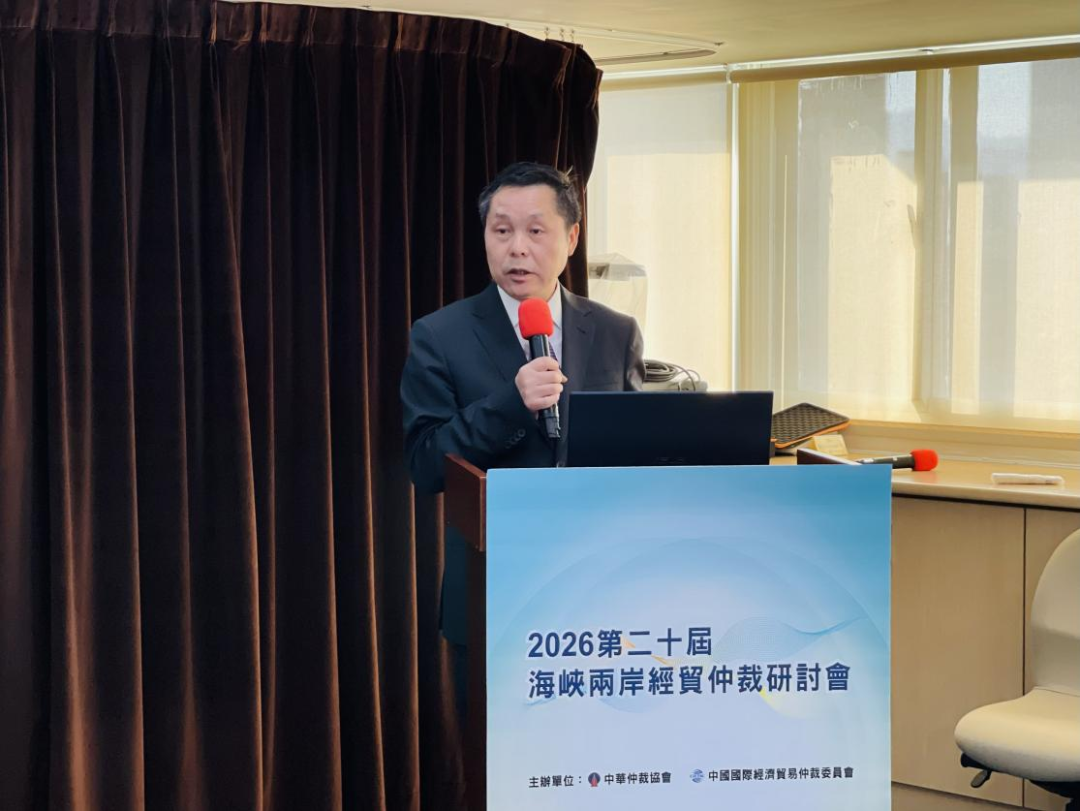
Wang Chengjie, Vice Chairman and Secretary-General of CIETAC, stated in his address that after the 2018 Cross-Strait Economic and Trade Arbitration Symposium held in Taipei, it has been eight years since the last gathering in Taiwan,China—a truly remarkable occasion. He extended heartfelt gratitude to TAIWAN CAA, for its substantial assistance in facilitating this visit by the CIETAC delegation. The successful convening of this symposium not only stems from the concerted efforts and promotion by visionary individuals on both sides of the Strait, but also demonstrates that in today's era of steadily developing cross-strait economic and trade relations, establishing a platform for arbitration legal exchange is a necessity of the times, and deepening cooperation in the field of cross-strait arbitration is widely anticipated. Wang Chengjie, as a witness and participant in cross-strait arbitration exchanges and cooperation, offers the following recommendations: First, the arbitration community should uphold independence and impartiality while enhancing the efficiency of arbitration services. In response to the increasing diversity and complexity of cases involving cross-strait economic and trade disputes, it is essential to actively explore effective pathways to translate rule advantages into practical efficacy. Such efforts will provide more intelligent solutions for resolving economic and trade disputes across various fields efficiently and at a high level, thereby attracting more commercial entities to choose arbitration as their dispute resolution method. Second, deepen practical cross-strait cooperation and refine the arbitration service system. Addressing differences in specific provisions and operational practices between the two sides of the strait requires professionals to break down barriers , enhance consensus , and advance integration. Deepen exchanges on the wisdom and experience accumulated in the legal systems and practices of cross-strait arbitration to improve quality and efficiency . Expand the coverage, enhance the efficiency, and optimize the quality of arbitration services, providing a more robust legal guarantee for cross-strait economic and trade cooperation. Third, the arbitration community must strengthen digital and intelligent  empowerment  to jointly build a new ecosystem for international arbitration. Cross-strait economic and trade disputes increasingly involve emerging industries, business models, and operational paradigms, making “AI + arbitration” a cutting-edge focus. Against this backdrop, the digital and intelligent transformation of arbitration not only aligns with the demands of the digital economy but also actively responds to the dispute resolution needs of parties across the strait. It is hoped that the arbitration communities on both sides of the strait will uphold the principle of technology for good, strengthen arbitration service capabilities from dimensions such as rule-making, technology application, infrastructure, and ethical security, expand the application scenarios of digital and intelligent technologies, and jointly build an open, transparent, inclusive, and efficient new ecosystem for international arbitration. Wang Chengjie further noted that the newly revised mainland Arbitration Law is about to take effect, presenting new historical opportunities for arbitration. This symposium comes at a timely moment, serving not only as an in-depth and pragmatic exchange within the cross-strait arbitration field but also poised to open a new chapter in cross-strait economic and trade arbitration cooperation. CIETAC stands ready to collaborate with all sectors across the strait to promote broader application of arbitration in cross-strait economic and trade activities, thereby making greater contributions to safeguarding the healthy and stable development of cross-strait economic and trade relations.


(Wang Chengjie, Vice Chairman and Secretary-General of CIETAC, Delivered the Opening Address)


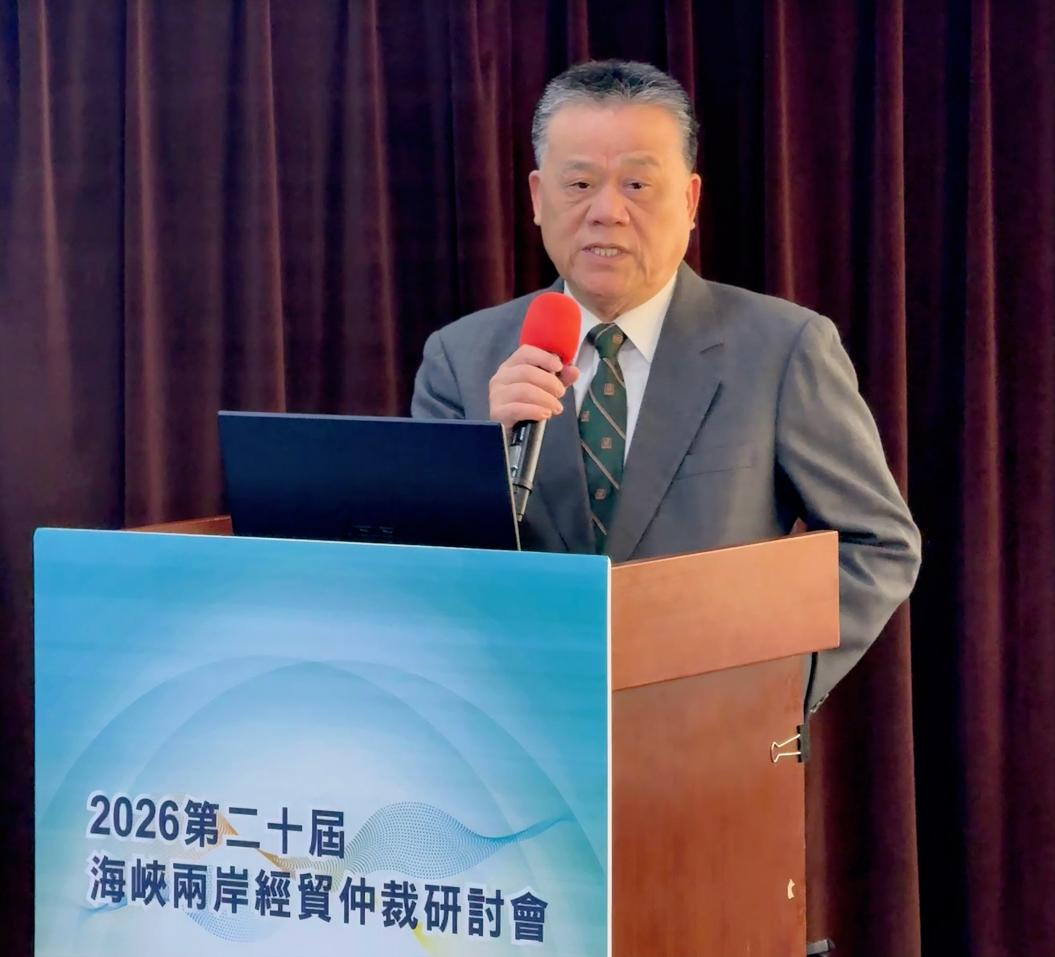
Wu Yeong-Chyan, Chairman of TAIWAN CAA, placed great importance on inviting CIETAC to co-host the 20th Cross-Strait Economic and Trade Arbitration Symposium in Taiwan, China. Through his active promotion and the joint efforts by many parties, the symposium was successfully brought to fruition. He extended a warm welcome to Wang Chengjie, Vice Chairman and Secretary-General of CIETAC, and the mainland delegation. He noted that TAIWAN CAA and CIETAC share a long history of cooperation marked by fruitful outcomes. After an eight-year interval, their reunion in Taiwan, China to discuss cutting-edge issues in cross-strait arbitration practice and explore ways for arbitration institutions on both sides of the strait to consolidate and expand cooperation holds practical significance for enhancing mutual understanding and deepening substantive collaboration among arbitration professionals across the strait. TAIWAN CAA and CIETAC will continue to work hand in hand to promote the broader application of arbitration in resolving cross-strait commercial disputes, protect the legitimate rights and interests of parties involved in economic, trade, and investment activities, and advance the harmonious development of arbitration systems on both sides of the strait.


(Wu Yeong-Chyan, Chairman of TAIWAN CAA, Delivered the Opening Address)


This symposium focused on cutting-edge issues in cross-strait arbitration practice, centering on three key themes: (a)the application and practice of interim preservation measures and mechanisms to enhance arbitration efficiency across the strait; (b)the development and challenges of arbitration institutions and Ad Hoc Arbitration across the strait; (c)the latest practices and developments in intellectual property arbitration across the strait. Nineteen experts and scholars from the Mainland and Taiwan engaged in in-depth exchanges, sharing diverse perspectives, sparking intellectual discussions, and forging consensus. Their contributions provided valuable insights and practical considerations for promoting the proper resolution of cross-strait commercial disputes and safeguarding cross-strait economic and trade exchanges through professional arbitration services.

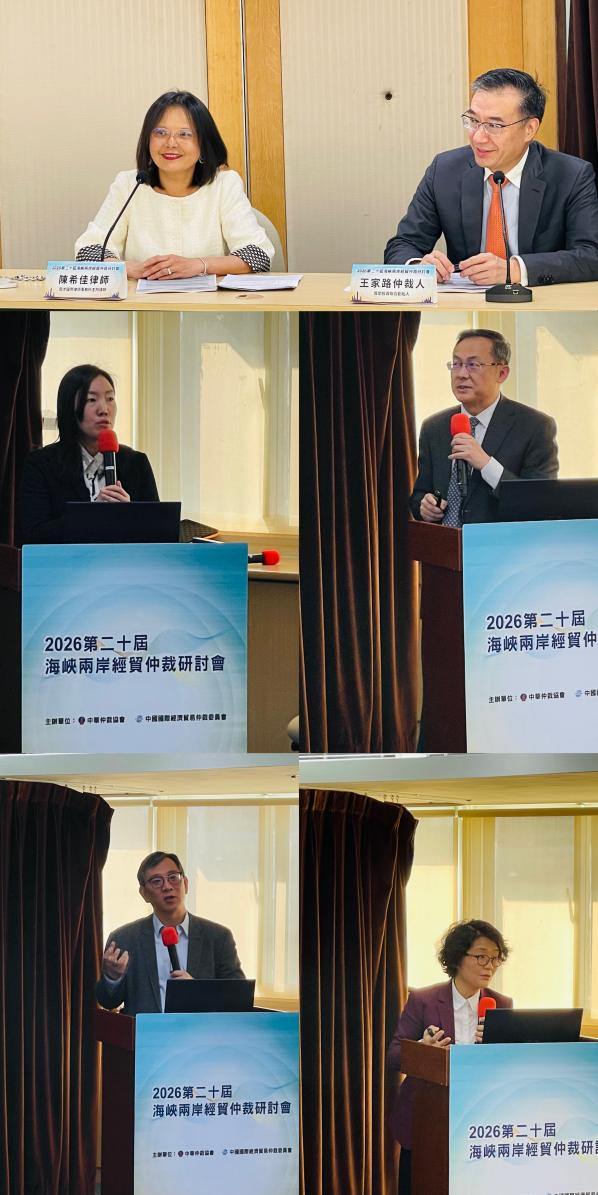
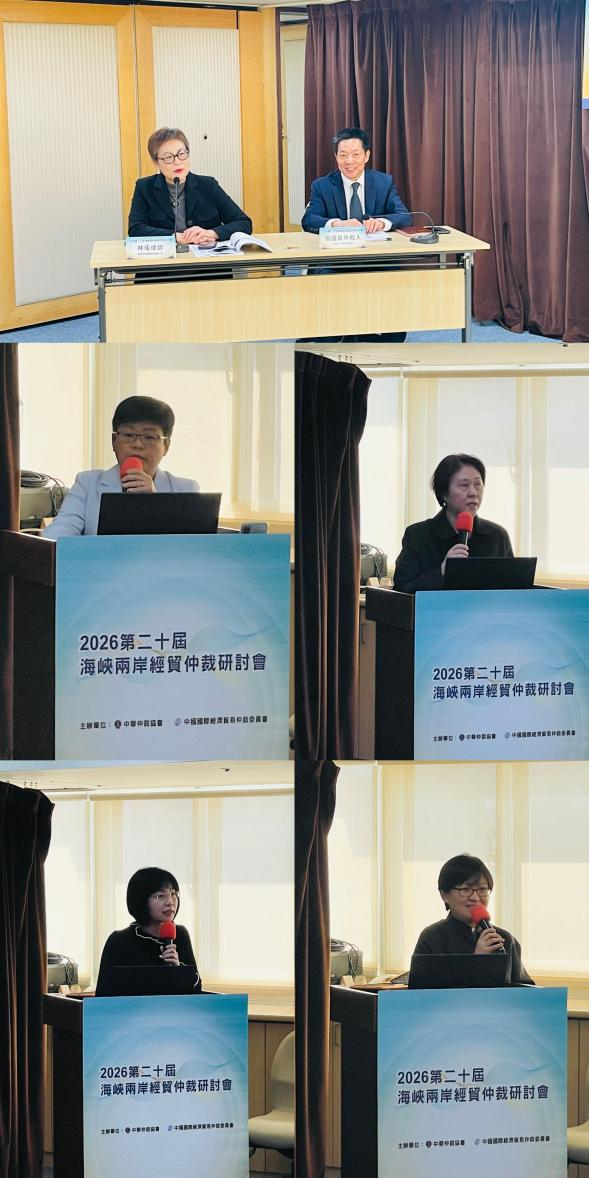
The first session was co-chaired by Helena Chen, Managing Partner at Taiwan’s Chen & Chang, Attorneys-at-Law,  and Wang Jialu, Co-founder of Hozu Capital  and CIETAC Arbitrator. The presenters, Joyce Chen, Partner at Taiwan’s Lee and Li, Attorneys-at-Law,  and Meng Ting, Director of Beijing GoldenGate Law Firm  and CIETAC Arbitrator, respectively introduced the provisions and practices concerning interim preservation measures on both sides of the Strait. Drawing on trends in international arbitration and the practical needs of parties, they proposed leveraging procedural tools such as interim measures in arbitration to enhance efficiency. Hsu Yao-Ming, Professor of the College of Law, National Chengchi University  and Tan Jinghui, Director of Beijing Jundu Law Firm  and CIETAC Arbitrator, served as discussants. They offered insights and suggestions on further improving interim preservation measures in cross-strait arbitration proceedings from an integrated perspective encompassing academic research, legislative development, and practical application. 


(From Left to Right, Top to Bottom: Helena Chen, Managing Partner at Taiwan’s Chen & Chang, Attorneys-at-Law; Wang Jialu, Co-founder of Hozu Capital and CIETAC Arbitrator; Joyce Chen, Partner at Taiwan’s Lee and Li, Attorneys-at-Law; Meng Ting, Director of Beijing GoldenGate Law Firm and CIETAC Arbitrator; Hsu Yao-Ming, Professor of the College of Law, National Chengchi University; Tan Jinghui, Director of Beijing Jundu Law Firm and CIETAC Arbitrator)


The second session was co-chaired by Lin Yao, Deputy CEO  at  Taiwan’s Lee and Li, Attorneys-at-Law , and Weng Guomin, former Professor of Commercial Law at Zhejiang University and CIETAC Arbitrator. Alison Chang, Partner at Taiwan’s Chen & Chang, Attorneys-at-Law , and Qu Zhujun, former Director of the Working Committee Division of CIETAC  and CIETAC Arbitrator, served as presenters. They shared the latest practices and legal provisions concerning ad hoc arbitration on both sides of the Strait and exchanged views on the opportunities and challenges facing the ad hoc arbitration system across the strait. Yan  Yuh-Ming, Professor of the College of Law, National Chengchi University  and Li Yun, Secretary-General of CIETAC Shanghai Sub-Commission , served as discussants. They further analyzed the respective advantages of institutional arbitration and ad hoc arbitration, suggesting that the arbitration communities on both sides of the strait actively promote the complementary development of these two forms of arbitration, expand avenues for cooperation, and jointly foster a legal culture, professional capabilities, and institutional ecosystem conducive to ad hoc arbitration.


(From Left to Right, Top to Bottom: Lin Yao, Deputy Partner at Taiwan's Lee and Li, Attorneys-at-Law; Weng Guomin, Former Professor of Commercial Law at Zhejiang University and CIETAC Arbitrator; Alison Chang, Partner at Taiwan's Chen & Chang, Attorneys-at-Law; Qu Zhujun, Former Director of the Working Committee Division of CIETAC and CIETAC Arbitrator; Yan Yuh-Ming, Professor from the College of Law, National Chengchi University; Li Yun, Secretary-General of CIETAC Shanghai Sub-Commission)


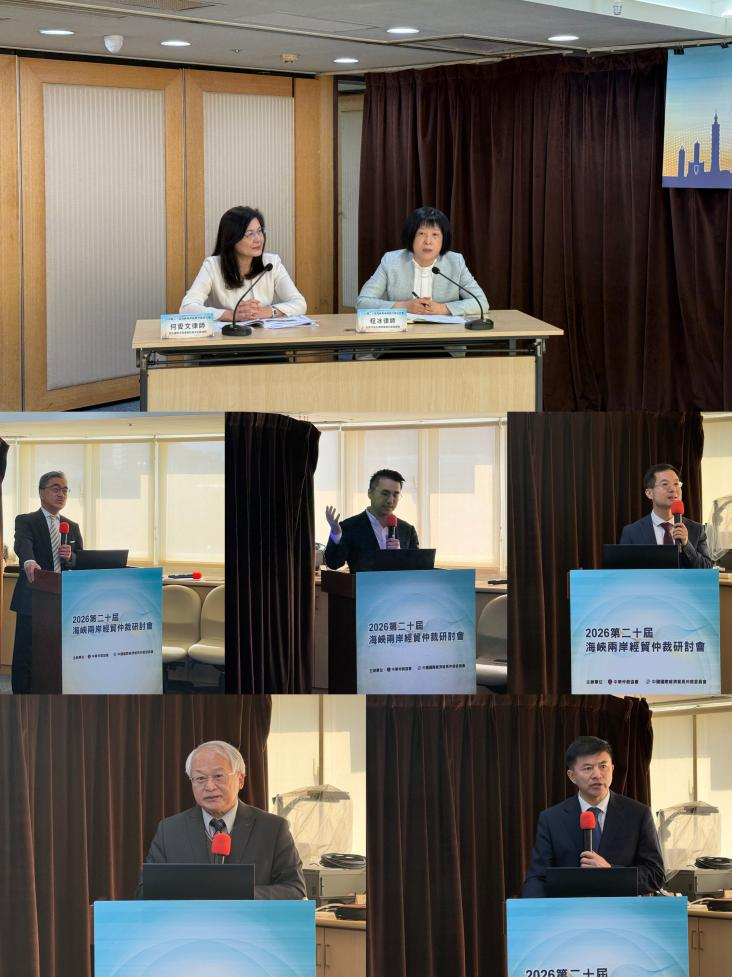
The third session was co-chaired by Joyce Ho, Senior Partner at Tsar and Tsai Law Firm , and Cheng Bing, Senior Consultant at Beijing's King & Wood Mallesons  and CIETAC Arbitrator. The presenters— George Lin, Managing Partner , and Henry Lin, Senior Associate, from Lin & Partners , and Zhao Yun, Henry Cheng Professor in International Law and Associate Dean (Mainland Affairs), Faculty of Law at The University of Hong Kong (HKU)  and neutral at CIETAC Online Dispute Resolution Center (ODRC) —compared the regulatory systems and arbitration practices related to virtual assets and intellectual property on both sides of the Strait. They briefed on recent developments and analyzed future trends in these fields. During the discussion session, Tsai Ming-Cheng, Professor of the National Yang Ming Chiao Tung University School of Law  offered detailed responses on the legal characterization, applicable law, and arbitrability of cryptocurrencies. Wang Zhengzhi, Director of Globe-Law Lawyers  and CIETAC Arbitrator, further elaborated on cross-strait practices in intellectual property arbitration, highlighting in particular the work and achievements of CIETAC in this area.


(From Left to Right, Top to Bottom: Joyce Ho, Senior Partner at Tsar and Tsai Law Firm; Cheng Bing, Senior Consultant at Beijing's King & Wood Mallesons and CIETAC Arbitrator; George Lin, Managing Partner from Lin & Partners; Henry Lin, Senior Attorney from Lin & Partners; Zhao Yun, Henry Cheng Professor in International Law and Associate Dean (Mainland Affairs), Faculty of Law at The University of Hong Kong (HKU) and Neutral at CIETAC Online Dispute Resolution Center (ODRC); Tsai Ming-Cheng, Professor from the National Yang Ming Chiao Tung University School of Law; Wang Zhengzhi, Director of Globe-Law Law Firm and CIETAC Arbitrator)


The half-day symposium concluded amidst lively discussions and mutual learning. This symposium effectively met the practical needs of cross-strait arbitration development, providing valuable insights for resolving critical and challenging issues in arbitration practices across the Strait. It created a professional dialogue platform, further deepening mutual understanding and pragmatic cooperation in cross-strait economic and trade arbitration. The symposium underscored the firm confidence of arbitration professionals on both sides in enhancing consensus and advancing together. The symposium drew coverage from local media in Taiwan, China, which noted that the Cross-Strait Economic and Trade Arbitration Symposium—jointly organized by CIETAC and TAIWAN CAA—“has become an annual gathering for professionals in the industrial, business, and legal sectors across the Strait.”

On the eve of the symposium, the TAIWAN CAA hosted its 2025 Year-End Banquet and a welcome dinner for the CIETAC delegation. More than a hundred distinguished experts and prominent figures from Taiwan's arbitration, legal, business, and academic communities gathered to strengthen bonds in a warm and congenial atmosphere. During the banquet, the CIETAC delegation engaged in extensive and in-depth exchanges with representatives from various sectors across the strait on the resolution of cross-strait economic and trade disputes and avenues for cooperation. Attendees unanimously expressed their earnest desire to enhance mutual understanding and collaboration, anticipating that TAIWAN CAA and CIETAC would continue to work together to deepen dialogue and jointly chart future development. Their shared goal is to build a solid bridge for advancing exchanges and cooperation in the field of cross-strait arbitration. The banquet was filled with a profound sense of cross-strait camaraderie.

Since 2000, CIETAC and TAIWAN CAA have reached a consensus to hold symposium as a "joint organization with venue rotation." These Cross-Strait Economic and Trade Arbitration symposiums have been held annually, with the venues rotating between the Mainland and Taiwan, serving as a significant professional platform for exchanges and cooperation among arbitration legal professionals and the industrial and commercial communities across the Strait. The recent series of events in Taiwan, including the 20th Cross-Strait Economic and Trade Arbitration Seminar, marked an "ice-breaking journey" for arbitration professionals from Mainland institutions to first conduct exchanges in Taiwan in recent years. Widely anticipated and warmly welcomed by arbitration legal experts from both sides, this symposium opened a new chapter in cross-strait arbitration exchanges and cooperation, conveyed a positive message of joint development and collaboration, and injected new vitality into deepening the integration and mutual progress of cross-strait arbitration.

{{ article.quickLinkTitle ? article.quickLinkTitle : 'Quick Links' }}
Quick Links