The Seminar on Dispute Resolution for Existing PPP Projects was successfully held in Beijing on December 26, 2025.

Co-hosted by the Civil, Commercial and Economic Law School, China University of Political Science and Law (“CUPL”) and the China International Economic and Trade Arbitration Commission (“CIETAC”), the seminar was co-organized by the China Civil and Commercial Dispute Resolution Research Center of CUPL, as well as the Real Estate & Energy Practice Group and Professional Committee of Beijing Dacheng Law Offices.

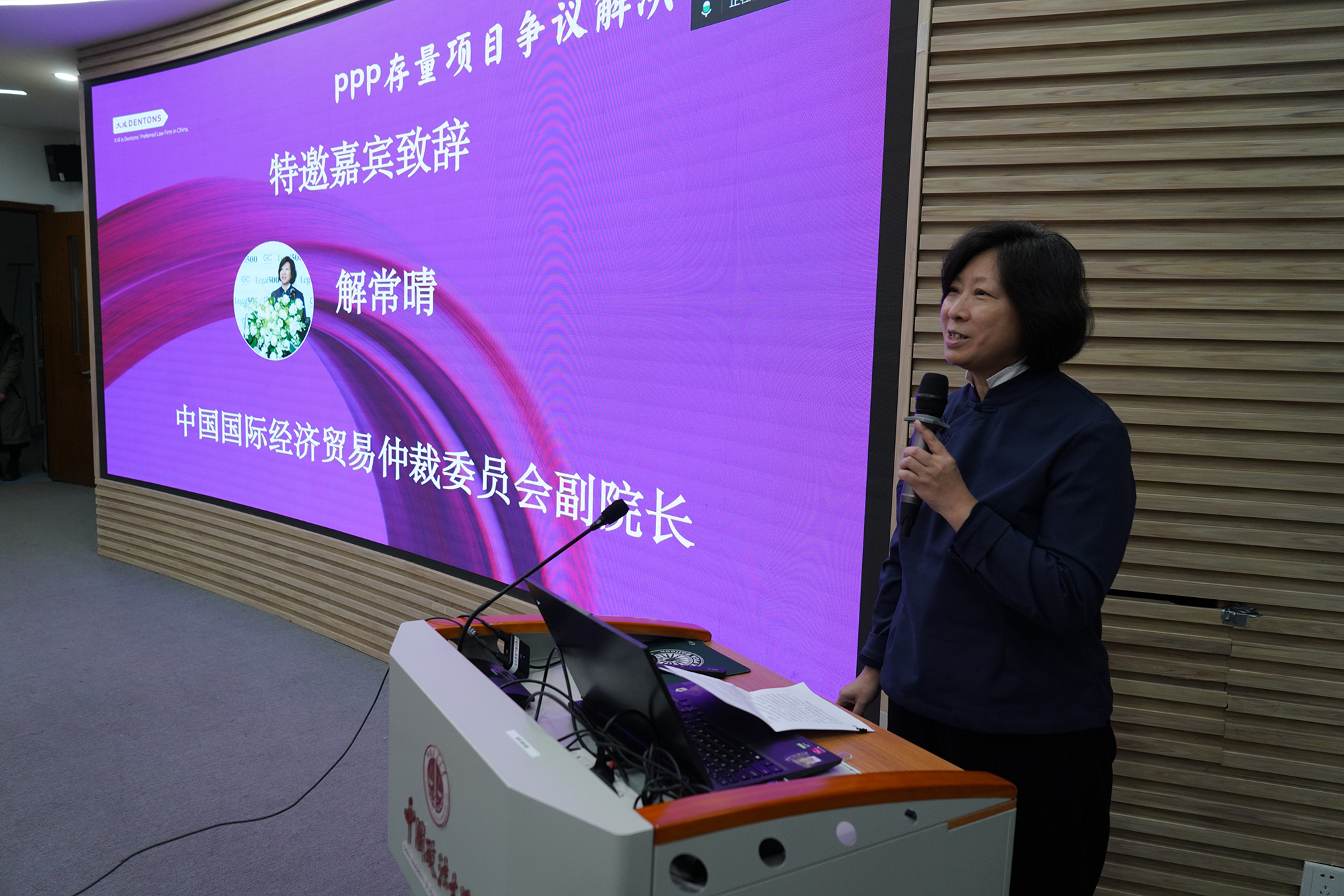
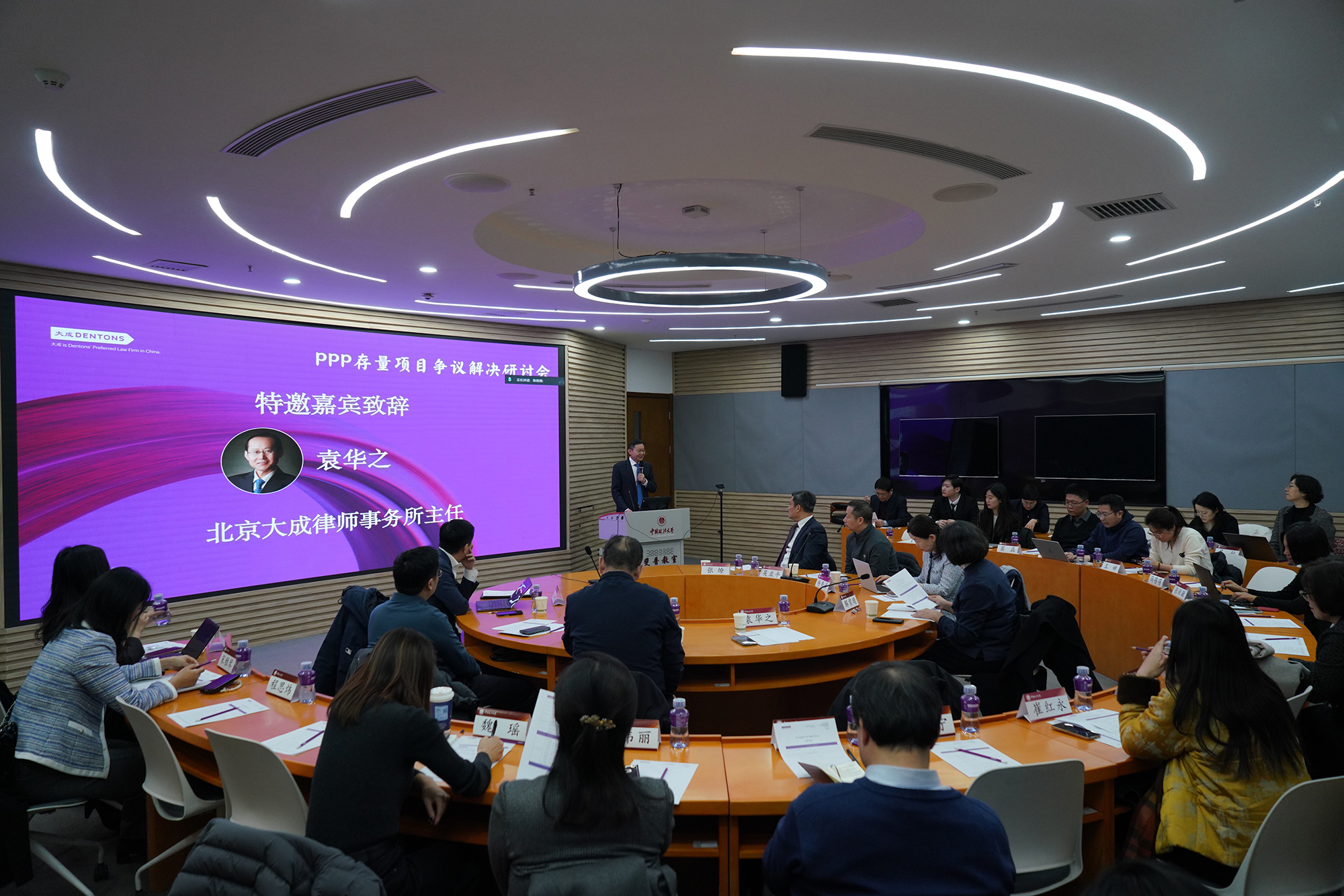
Xie Changqing, Vice President of the Arbitration Court of CIETAC, Yang Xiuqing, Executive Dean of the Civil, Commercial and Economic Law School and Director of the China Civil and Commercial Dispute Resolution Research Center of CUPL, and Yuan Huazhi, Director of Beijing Dacheng Law Offices, attended the seminar and delivered opening remarks.


 (Remarks by Vice President Xie Changqing)


In her address, Vice President XIE Changqing pointed out that most existing PPP projects contracts were signed during the industry expansion period, giving rise to problems including flawed contracts, disputes over the legal nature of contracts and unclear dispute resolution approaches, posing great practical challenges to project performance and dispute resolution.Notice of the General Office of the State Council (Letter No. 84 [2025] of the General Office of the State Council) on Forwarding the Ministry of Finance’s Guiding Opinions on Regulating the Construction and Operation of Existing Public-Private Partnership(PPP)Projects provides guidance for the regulation of existing projects and the settlement of disputes in terms of contract performance, financing, negotiation and rights protection, and its reflection of the equal positioning of governments and private entities is highly consistent with the dispute resolution concept of commercial arbitration.As a national-level arbitration institution long engaged in this field, CIETAC has handled over 500 relevant cases and established China’s first PPP Arbitration Center in 2017. CIETAC’s panel of arbitrators brings together interdisciplinary experts in law, engineering, finance and other fields needed for PPP dispute resolution. They strictly adhere to legal principles, follow commercial rules, respect capital operation logic, balance the demands of both governments and enterprises, and facilitate the long-term sound operation of projects with professionalism and impartiality, fully demonstrating CIETAC’s unique advantages in resolving PPP disputes.Going forward, CIETAC will continue to leverage its professional and platform strengths, work with all stakeholders to advance the improvement and implementation of the PPP dispute resolution regulatory framework, and contribute wisdom and efforts to building a stable, fair and predictable legal environment for PPP and promoting the sound and steady development of the economy and society.


(Seminar)


The seminar also included sessions such as keynote speeches and panel discussions. Attending experts, including ZHAO Quanhou, Researcher of the Research Center for Finance, Chinese Academy of Fiscal Sciences, WU Yaping, Researcher of the National Development and Reform Commission(NDRC) Investment Institute, and WANG Jihong, CIETAC Arbitrator and Senior Consultant of ZhongLun Law Firm, delivered speeches and conducted discussions on practical difficulties and hot topics, such as “Basic Status Quo and Policy Regulatory Requirements of Existing PPP Projects”, “Reflections on the Future Fiscal Expenditure Responsibilities of Existing PPP Projects” and “Dilemmas and Solutions for Dispute Resolution in the Post-PPP Era”.

The seminar brought together authoritative experts and practitioners from government departments, judicial organs, arbitration institutions, prestigious universities, law firms and the business sector. Focusing on the causes and resolution paths of disputes concerning existing PPP projects, the participants conducted in-depth interpretation of the new policies, deliberated on implementation recommendations, and built consensus and mapped out directions for fostering a stable, fair and predictable legal environment for PPP.

{{ article.quickLinkTitle ? article.quickLinkTitle : 'Quick Links' }}
Quick Links