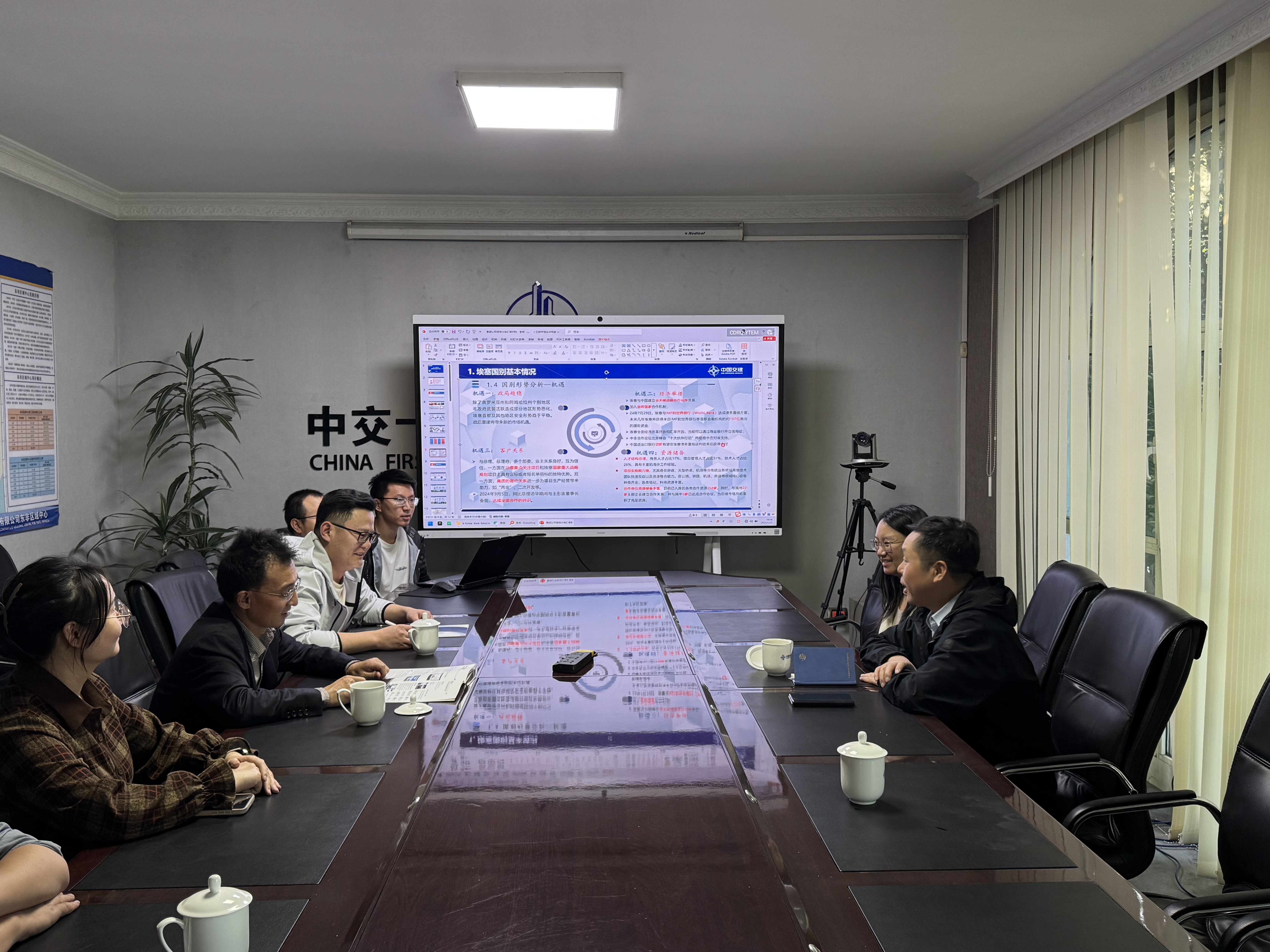
To better provide high-quality dispute resolution services for Chinese enterprises“going global”and gain an in-depth understanding of common disputes, legal risks, and dispute resolution needs faced by Chinese-funded companies in Ethiopia, Wang Chengjie, Vice Chairman and Secretary-General of the China International Economic and Trade Arbitration Commission (CIETAC), led a delegation to visit the China Chamber of Commerce in Ethiopia and hold discussions on the afternoon of February 22.

Leaders of the China Chamber of Commerce in Ethiopia and heads of relevant departments received the delegation. Ma Teng, Deputy Secretary General of the China Chamber of Commerce in Ethiopia, provided a comprehensive and detailed introduction to Ethiopia’s business environment, and organizational structure, functional positioning and current business status of the Chamber.


Secretary General Wang Chengjie expressed gratitude for the Chamber’s reception. He stated that CIETAC’s visit to Ethiopia along with the China Council for the Promotion of International Trade (CCPIT) entrepreneurs delegation was a concrete action to implement the outcomes of the 2024 Summit of the Forum on China-Africa Cooperation (FOCAC), aiming to strengthen exchanges and cooperation with industrial, commercial, and legal communities in Africa. He noted that China-Africa relations are currently at their historical peak. Against the backdrop of a complex global economic landscape and deepening regional economic cooperation, arbitration, as an internationally recognized dispute resolution mechanism, is playing an increasingly vital role. Therefore, conducting in-depth research on the legal risks and dispute resolution needs faced by Chinese-funded enterprises in Ethiopia holds significant importance. He briefly introduced CIETAC’s recent business developments and internationalization efforts, highlighting its active contributions in shaping international rules, optimizing arbitrator team, establishing global arbitration cooperation mechanisms, and serving the Belt and Road Initiative. Subsequently, Secretary-General Wang Chengjie listened to participants’ practical challenges, including security risks, customs clearance inefficiencies, cumbersome visa procedures, tax policy complexities, and commercial legal risks arising from policy uncertainties and political instabilities.

Secretary General Wang emphasized that arbitration is not only an effective means to resolve disputes but also a powerful tool for participating in global governance. He advised Chinese-funded enterprises operating overseas to proactively take the lead in drafting dispute resolution clauses, leverage diverse mechanisms such as arbitration to mitigate legal risks, and resolve disputes appropriately. He particularly stressed that as Chinese-funded enterprises expand globally, they should actively promote the internationalization of China’s legal services, making China’s contribution to the establishment of a fair and rational international economic and governance order.

Participants unanimously agreed that the in-depth exchange with CIETAC deepened their understanding of arbitration’s advantages in resolving international commercial disputes and the mission of Chinese-funded enterprises. They hope CIETAC to intensify its promotional efforts in African markets, engage in comprehensive and deep cooperation with local arbitration and legal communities, enhance its global influence, and provide Chinese-funded enterprises abroad with more diverse and high-quality dispute resolution options. Additionally, they advised CIETAC to assist enterprises in building risk management systems covering entire project lifecycles and jointly advance the internationalization of China’s legal and arbitration systems.


The CIETAC delegation also conducted an on-site inspection of the GCH project of a flagship Chinese enterprise’s East Africa Regional Center in Ethiopia. Through field research on project progress and challenges in contract performance—particularly in engineering and construction—the delegation provided risk prevention recommendations.

The exchanges and on-site investigations enabled the CIETAC delegation to gather critical insights, laying the groundwork for future efforts to provide targeted and high-quality dispute resolution services for enterprises “going global” and to support the steady and sustainable advancement of the Belt and Road Initiative.

{{ article.quickLinkTitle ? article.quickLinkTitle : 'Quick Links' }}
Quick Links